Google Maps has changed Lake Ontario to Lake America for US users
Developing story first seen 5 hours ago
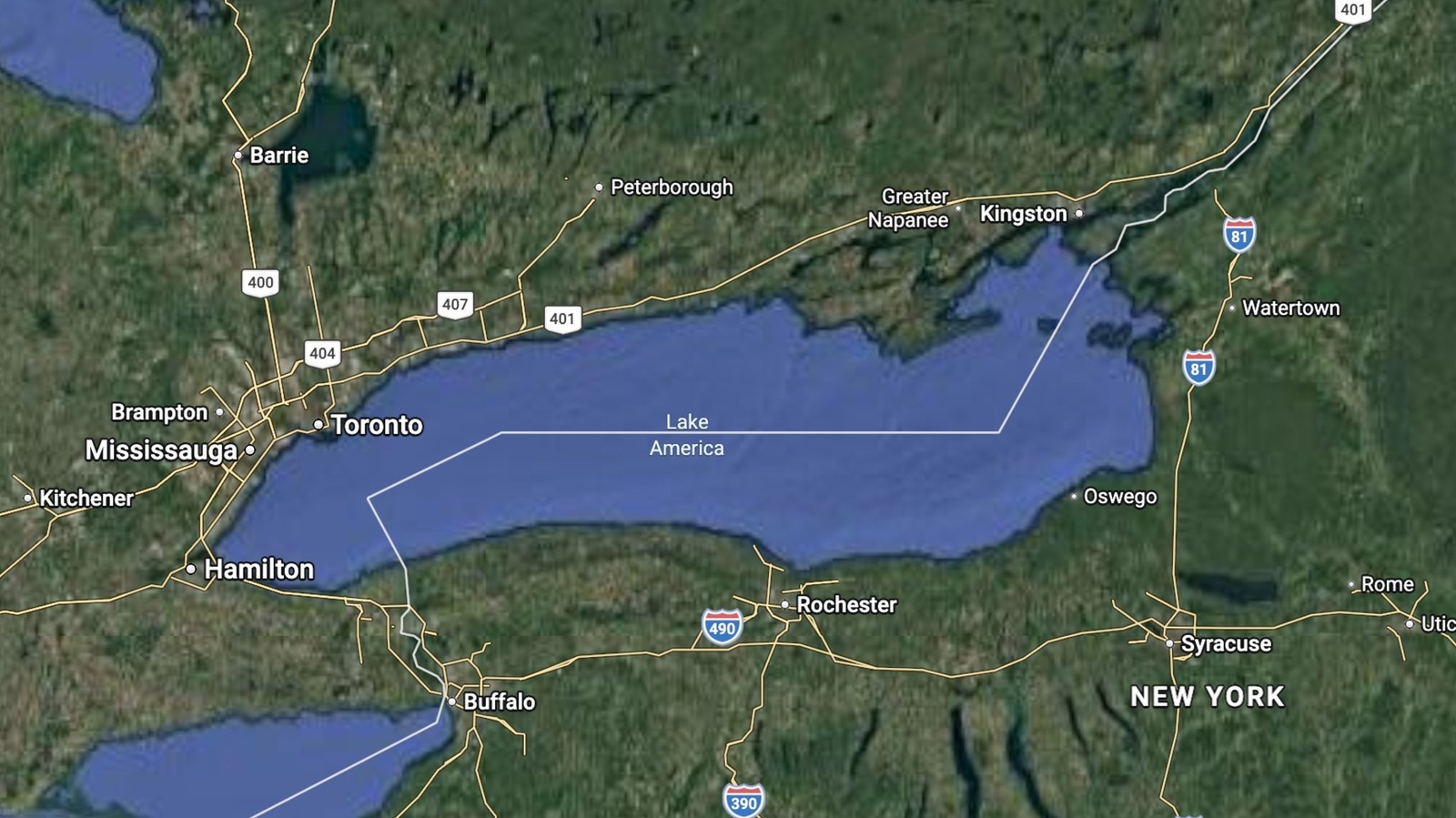
Google has updated Maps to rename Lake Ontario as "Lake America" for users in the United States, following President Trump's executive order and a subsequent change by the US government's official place-names authority. The relabelling mirrors last year's switch of the Gulf of Mexico to "Gulf of America" and shows how the administration's renaming campaign continues to be enforced through the databases that underpin digital mapping services, rather than remaining a purely symbolic gesture.
The change stems from an update this week to the Geographic Names Information System (GNIS), the US government's official naming register, which Google says it follows for American users. Canadian users will still see "Lake Ontario", while people viewing the map elsewhere may see both names displayed together. Apple Maps has not yet made the equivalent change, though it did adopt "Gulf of America" last year and is expected to follow suit here too.
- Google Maps now shows "Lake America" instead of Lake Ontario for US users
- Change follows Trump order and a GNIS database update this week
- Canada still sees "Lake Ontario"; Apple Maps hasn't updated yet
New here? Start with this
Google Maps has begun showing "Lake America" instead of "Lake Ontario" for people browsing the map from within the United States. The change follows an order from President Trump and an update to the Geographic Names Information System, the official body that decides what US government maps and records call places. Google says it simply mirrors whatever names appear in these official government sources, and it made a similar switch last year when the Gulf of Mexico became the "Gulf of America" for US users.
Lake Ontario is one of the five Great Lakes, sitting on the border between the United States and Canada, so any renaming has a cross-border dimension. Canadian users will still see "Lake Ontario" on their maps, while people elsewhere in the world may see both names displayed together, meaning the label someone sees can depend entirely on their location.
The story matters because it shows how disputes over place names, once largely symbolic, now play out directly on the digital maps hundreds of millions of people use every day. It also raises questions about how other companies, such as Apple, will respond, since Apple Maps has not yet made the equivalent change to the lake despite having adopted "Gulf of America" previously.
Both sides, in good faith
The strongest fair case each way — we don't pick a winner.
The case for
Supporters argue that a national government has the plain authority to decide what official name its own agencies and platforms use for geographic features within or bordering its territory, just as other countries maintain their own naming conventions. They see this as consistent with the earlier Gulf of America change, framing it as an assertion of national identity and sovereignty over how America presents its geography to its own citizens, rather than an attempt to dictate terms to Canada, since Canadian users still see Lake Ontario. They also note that mapping companies are simply following long-standing practice of mirroring each government's official naming database, which is a neutral, rules-based approach rather than editorial bias.
The case against
Critics argue that Lake Ontario is a shared international waterway bordering a close ally, and that unilaterally renaming it disregards Canadian sovereignty, historical usage and the goodwill that underpins the two countries' relationship, especially given recent trade and territorial tensions. They see the change as needlessly provocative symbolism that strains diplomatic ties for little practical benefit, and worry that erasing an Indigenous-rooted, centuries-old name in favour of an overtly nationalistic label sets a troubling precedent for how digital platforms can be used to project political messaging into everyday tools. They also caution that when tech companies automatically adopt government-mandated names without independent judgement, it normalises the use of neutral infrastructure, like maps, as instruments of political assertion.
More coverage