Google extends Gemini voice features to Gmail, Docs and Keep
Developing story first seen 2 hours ago
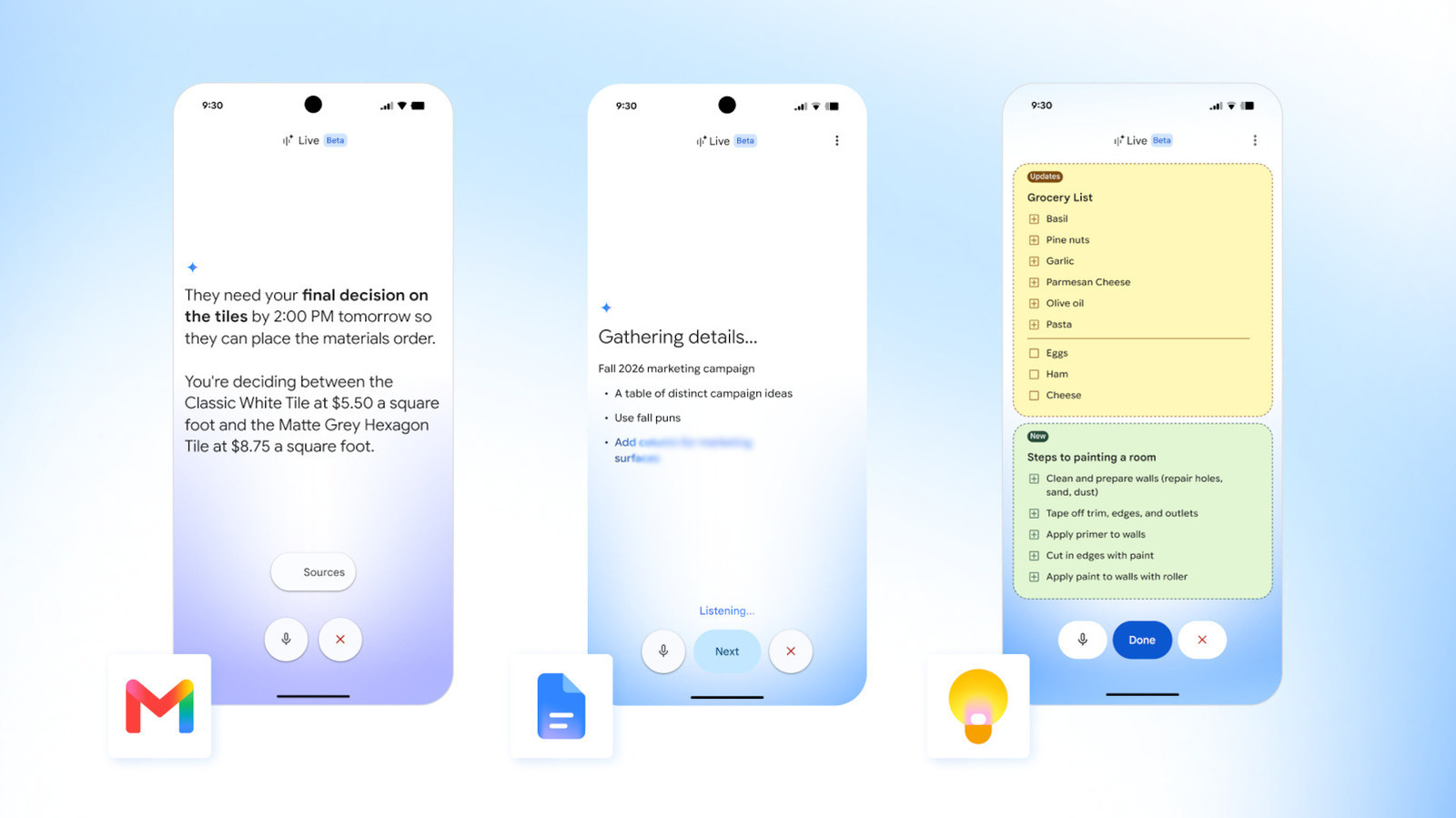
Google has moved its Gemini Live voice features for Gmail, Docs and Keep out of beta, making them generally available to all paying Google AI subscribers. The rollout extends Google's push to bring conversational, hands-free AI interaction into everyday productivity tools, letting users search, draft and organise content by speaking naturally rather than typing or navigating menus manually.
Gmail Live, first trialled in beta since June, lets users ask natural-language questions about their inbox, handle follow-up queries and interrupt or redirect the conversation, with an on-screen transcript and links to source emails; it is available on Android and iOS for Plus, Pro and Ultra subscribers. Docs Live helps structure and draft documents from spoken input, optionally pulling context from Drive, Chat, Gmail and the web, and is available on Android and iOS for Pro and Ultra subscribers. Keep Live can create lists and notes from spoken instructions, inferring context such as categorising items without explicit prompts, though it is currently limited to Android for Pro and Ultra subscribers.
- Gemini Live voice features now generally available for Gmail, Docs, Keep
- Gmail Live answers natural-language questions about your inbox
- Docs Live and Keep Live draft documents and notes by voice
New here? Start with this
Google has made Gemini Live, its voice-based AI assistant, a standard feature across Gmail, Docs and Keep for anyone paying for a Google AI subscription (Plus, Pro or Ultra tiers). These tools had been in testing since June, and the change means users can now speak to Google's apps rather than typing, asking questions or giving instructions much as they would in conversation.
The idea is to let people manage everyday tasks hands-free: asking about emails in their inbox, dictating and shaping documents, or creating notes and lists just by talking. Each app handles this differently and with varying availability across Android and iOS, reflecting how Google is embedding its Gemini AI more deeply into the software many people already use for work and daily organisation.
This matters because it signals a broader shift in how technology companies expect people to interact with everyday software, moving away from typing and clicking towards spoken, conversational commands. It also reflects ongoing competition among major tech firms to make AI assistants a routine part of common tools rather than a separate, optional feature.
Both sides, in good faith
The strongest fair case each way — we don't pick a winner.
The case for
Proponents see this as a genuine accessibility and productivity gain: speaking naturally to search an inbox, draft a document or jot a note removes friction for people who struggle with typing, screens or navigating complex menus, including those with disabilities, older users, or anyone multitasking. They value the way conversational AI can flatten the learning curve of powerful software, letting users redirect mid-task and see transcripts and source links, which supports both efficiency and a degree of transparency. For this camp, rolling a well-tested beta out to all paying subscribers is a sensible, incremental way to let people choose more intuitive tools without forcing anyone to use them.
The case against
Sceptics raise legitimate concerns about extending always-listening, AI-driven access into the most sensitive corners of personal and professional life, such as email content and private notes. They worry about the privacy and security implications of voice data and inferred context being processed by AI systems, the potential for errors or misinterpretations when an assistant infers categories or drafts content without explicit instruction, and a broader unease about growing dependence on proprietary AI layered over everyday tools. For this group, gating meaningful functionality behind paid tiers also raises fairness questions about who benefits from these advances, and they would prefer slower, more scrutinised rollout with clearer safeguards over rapid general availability.
Coverage