Cruz calls Vance insecure as speculation grows over 2028 Republican race
Developed over time first seen 4 days ago
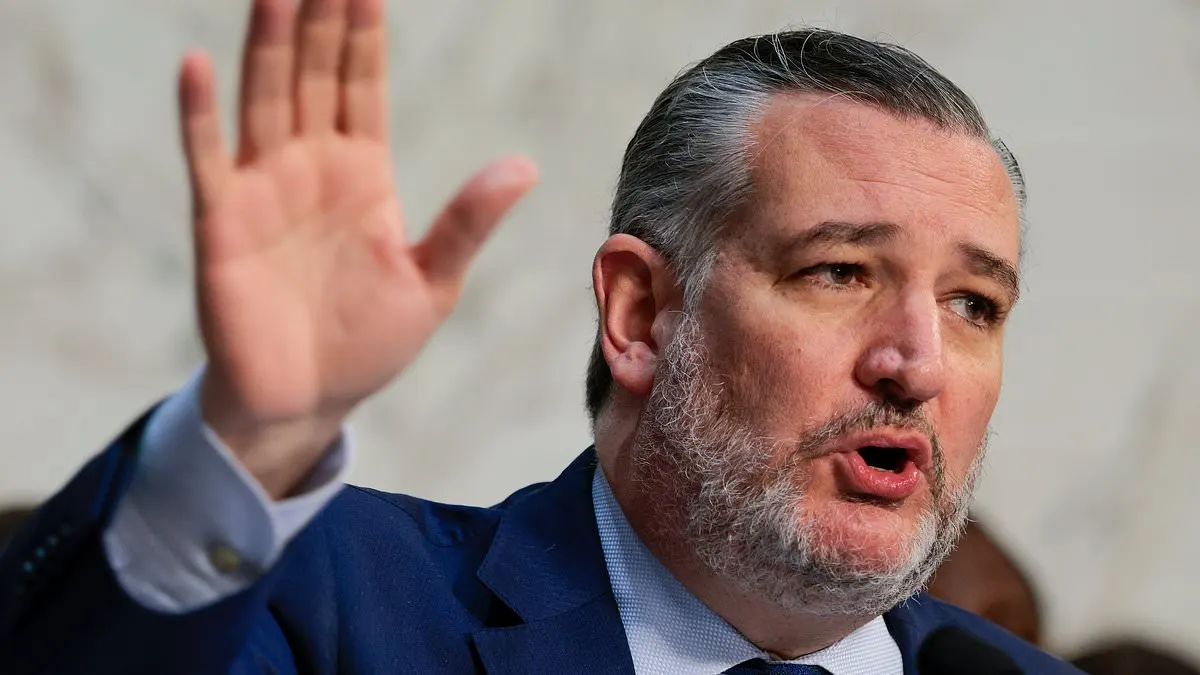
Ted Cruz and Vice President JD Vance have exchanged public criticism over who is positioning themselves for a 2028 presidential run. Vance accused Cruz of obviously campaigning for president, whilst Cruz countered that Vance is the one feeling insecure and distracted, insisting he is instead focused on helping Republicans win the midterm elections. The dispute matters because both men are prominent Republicans who could potentially contest the 2028 nomination.
The feud escalated after Cruz suggested in August that the Republican Party has not yet settled on Vance as their 2028 nominee. Cruz, who has campaigned extensively for Republican candidates over the past decade (including Vance himself during his 2022 Senate race in Ohio), says he is focused on fundraising and campaigning in swing states for the midterms. Prediction markets currently give Vance a 45 per cent chance of securing the GOP's 2028 presidential nomination, whilst Cruz has just 2 per cent.
- Cruz and Vance clash over who is actually running for 2028.
- Vance says Cruz is running; Cruz counters that Vance is insecure and distracted.
- Prediction markets give Vance 45% nomination odds, Cruz just 2%.
New here? Start with this
The Republican Party will choose its presidential nominee for the 2028 election in the coming years. Though no candidate has formally announced, the selection process is already generating speculation as various senior figures are being considered as potential contenders.
Two prominent Republicans being discussed as possible nominees are Ted Cruz, a senator from Texas who previously sought the party's nomination in 2016, and JD Vance, the current Vice-President. Both have established significant national profiles within their party.
Recent public comments between the two men have sparked discussion about the 2028 Republican presidential race and the question of party leadership. Such early discussions about potential candidates are common as the next election cycle approaches.
Both sides, in good faith
The strongest fair case each way — we don't pick a winner.
The case for
Open competition for the 2028 Republican nomination is healthy democratic practice, allowing the party to test multiple candidates and visions rather than accepting a predetermined choice. Whilst the exchange between Cruz and Vance may seem undignified, genuine debate reflects real alternatives and prevents the imposition of an establishment favourite that could alienate grassroots Republicans.
The case against
The absence of clear Republican leadership for 2028 risks repeating previous cycles of damaging internal division. With candidates positioning whilst publicly denying their intentions and no consensus on a frontrunner, the party struggles to communicate a coherent vision and faces vulnerability to a divisive primary contest that could weaken their eventual nominee against a Democratic opponent.
Full account
A public dispute has crystallised between two prominent Republican figures regarding their presidential ambitions, with Senator Ted Cruz and Vice President JD Vance exchanging pointed remarks about their respective intentions for the 2028 election. The clash has intensified speculation about how the Republican Party will shape its leadership direction in the coming years, as the electoral cycle draws closer.
During an interview with NBC News on Thursday, the Vice President directly asserted that Senator Cruz was manifestly pursuing a presidential bid. Vance maintained, however, that he had not yet committed to entering the race, stating that his current efforts were directed towards ensuring Republican success in the midterm elections. The Vice President's remarks constituted a direct challenge to Cruz's political positioning, implying that the Senator was prioritising his own electoral ambitions over party priorities.
When responding to reporters, Cruz characterised the Vice President's comments as evidence of insecurity, contending that such rhetoric typically stems from political anxiety. The Texan consistently emphasised his dedication to the forthcoming electoral contests whilst highlighting his record of supporting Republican candidates across the nation—a record which notably includes substantial assistance with Vance's successful senatorial campaign in Ohio in 2022. Tension between the two figures had already escalated following Cruz's statements in August that the Republican Party had not yet coalesced around Vance as its 2028 standard-bearer, suggesting the conversation about potential nominees remained genuinely open.
Both politicians have intensified their efforts to cultivate support within Republican circles. Cruz has mapped out an extensive campaign schedule across multiple states, whilst Vance has similarly embarked on his own campaign trail, with engagements scheduled throughout the country. This escalating dispute between two figures who could emerge as serious contenders for the Republican nomination reflects broader uncertainty within the party regarding its future direction and who might lead its 2028 presidential campaign.
Where outlets differ
Source 2 specifies the states where Cruz plans to campaign (Georgia, Iowa, Nebraska, South Carolina, Alaska, Florida, North Carolina), whereas Source 1 provides only a general statement without such geographic detail
Source 2 details Vance's recent campaign appearances and his scheduled Alaska rally, information Source 1 does not include
Source 1 references Cruz's accusation that Vance is influenced by podcaster Tucker Carlson, a point absent from Source 2
Source 2 provides historical context noting Cruz's 2016 presidential bid, whilst Source 1 omits this background
More coverage
Elections Geopolitics Government Politics World
Read the full article at the source →
Originally published by Daily Mail as “GOP race for president heats up as Ted Cruz hits back at ‘insecure’ JD Vance over claims Texas senator is ‘really obviously’ gunning for top job”.