Here’s how engineers plan to save the satellite sent to save NASA’s Swift mission
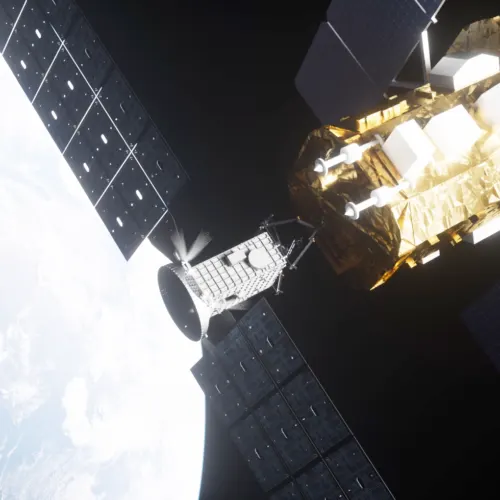
Katalyst Space Technologies is trying to regain control of Link, a small satellite launched to rescue NASA’s ageing Swift gamma-ray observatory, after it began spinning uncontrollably and lost two of its three reaction wheels. The incident threatens a time-sensitive mission that would be NASA’s first commercial servicing of one of its own satellites, as Swift will soon fall too low for a successful orbit-boosting attempt.
Link, built under a $30 million NASA contract, launched on 3 July and had been operating normally until the failure last Saturday. Engineers found a fault affecting cold-gas thrusters, but power, electric propulsion and capture hardware remain healthy; by using gimballed xenon plasma thrusters against the rotation, they had reduced the spin from about 9 to 4 degrees per second by Friday. Once steadier, the team plans to restore better communications, download diagnostic data and deploy revised control software developed with NASA.
- Link satellite lost attitude control during Swift rescue mission.
- Engineers have halved its spin using electric thrusters.
- Swift’s declining orbit leaves little time for recovery.