How cows are helping one of Britain’s rarest butterflies
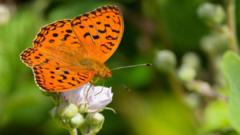
Volunteers in the Alun Valley at Old Castle Down, near Bridgend in south Wales, are working to save the high brown fritillary, one of Britain's rarest butterflies, whose numbers have fallen by 62% since 1970. Once widespread across Wales and England, the species is dying out almost everywhere else, but the site has become its last Welsh stronghold thanks to more than three decades of habitat management — and, recently, the help of grazing cows.
The butterfly needs a precise balance of bracken and common dog violet, the food plant for its caterpillars, which require the warmer ground temperatures created when cut bracken forms a layer of "litter". Volunteers have long coppiced hedges and cut back bracken, and for the past three years have encouraged local commoners to graze cattle on the common land, as the animals trample bracken without destroying it and create warm niches. Because the land is unfenced, National Lottery funding paid for solar-powered "no-fence" collars to keep the cows in place. The team, started by Paul Dunn and Richard Smith in 1993, has grown from two people to more than 40, the area has recorded over 37 butterfly species in a decade, and high brown numbers are rising once more.
- Cattle grazing is helping revive one of Britain's rarest butterflies.
- High brown fritillary numbers have fallen 62% since 1970.
- Old Castle Down near Bridgend is the butterfly's last Welsh home.