
How Duke Ellington helped to inspire one of prog-rock’s greatest freakouts in 1969
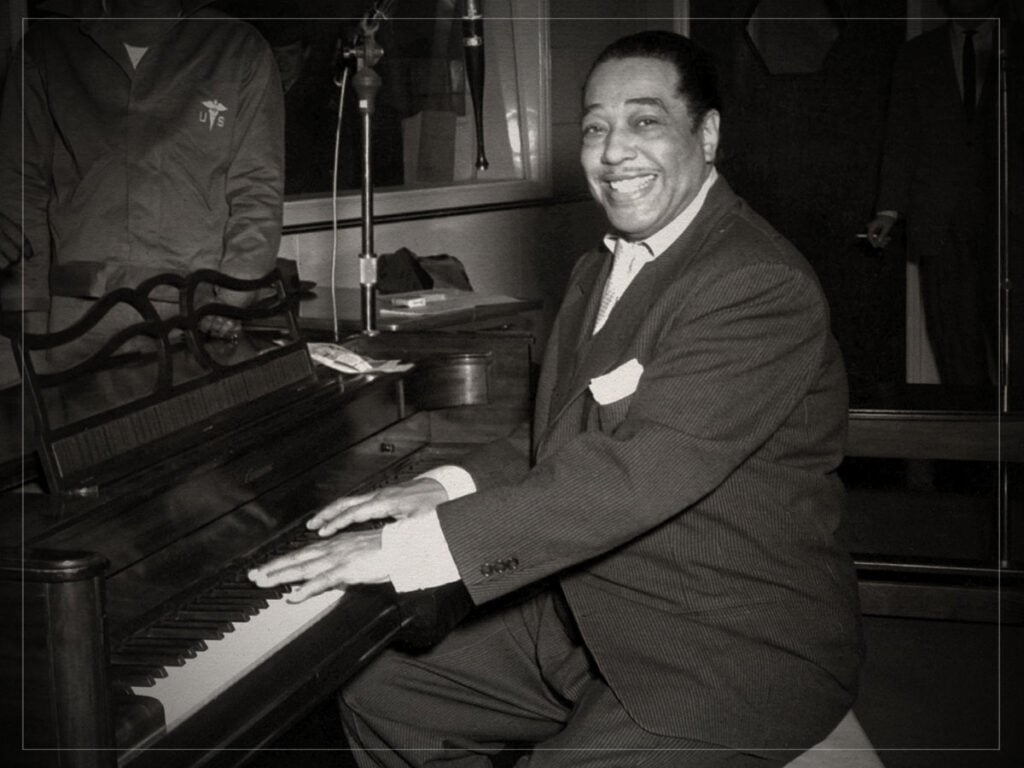
Duke Ellington resisted being defined as purely a jazz musician, instead viewing music as a vehicle for uninhibited artistic expression beyond any genre's constraints. His experimental ethos resonated deeply with progressive rock pioneers of the late 1960s, who adopted a similarly boundary-free approach to composition and performance.
King Crimson's 1969 song '21st Century Schizoid Man' exemplifies this influence, most notably in its final moments where the main riff accelerates progressively until the band loses synchronisation, erupting into chaotic noise that mirrors the kind of unrestrained creativity Ellington pioneered. Though the resulting sound defies easy categorisation as jazz, it reflects the shared philosophical commitment between Ellington and prog rock artists to prioritise creative intuition over structural convention.
- Duke Ellington rejected genre constraints and freely experimented with music throughout his career, influencing 1960s progressive rock musicians who shared his boundary-defying philosophy.
- King Crimson's 1969 prog-rock landmark '21st Century Schizoid Man' directly drew from Ellington's unbridled approach, particularly in its closing section where accelerating tempo dissolves into controlled chaos.