Nikon microscopy prize winner faces scrutiny over AI-coloured cilia footage
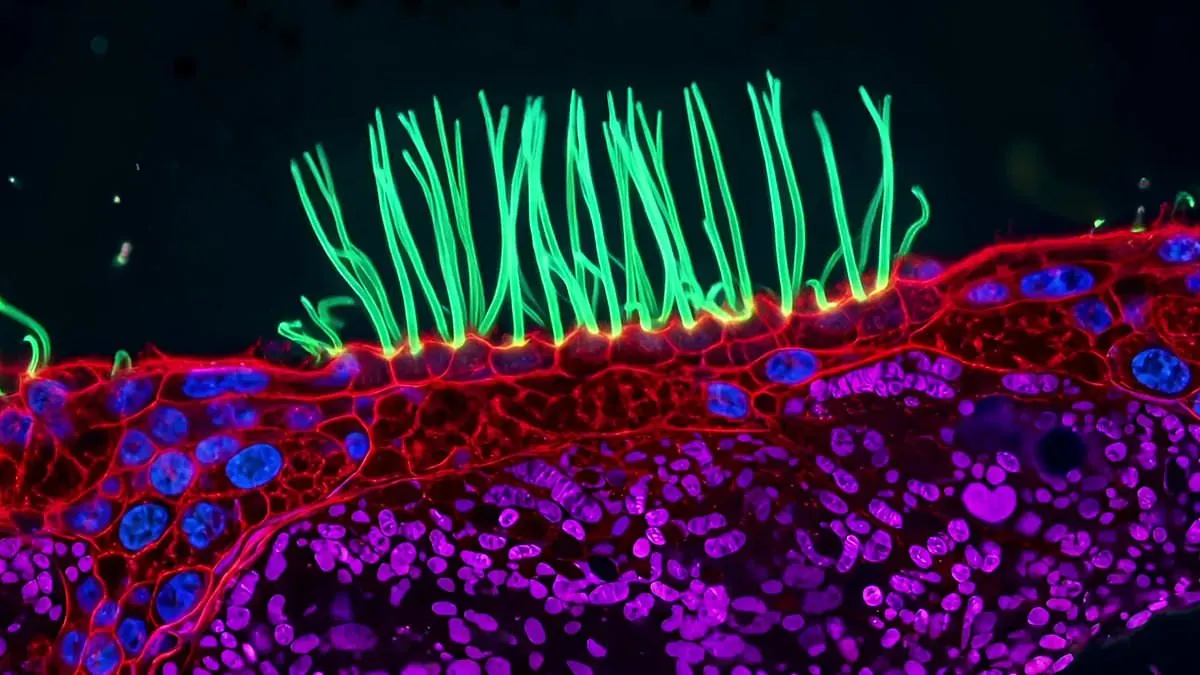
Dr Ning Xu of Tsinghua University won the top prize at Nikon's "Small World in Motion" microscopy competition with a video of cilia in a child with a rare genetic disease, but faced intense backlash when scientists questioned its authenticity. The controversy highlights a fundamental tension in modern science: the distinction between using AI to visualise existing data beautifully versus using it to generate or fabricate scientific evidence.
The $3,000 (£2,250) prize-winning entry featured bright green cilia with movements that experts found suspiciously "unnatural", and some detected a Google AI watermark on the footage. Dr Xu admitted to using artificial intelligence to add green colour to the original black-and-white data, but denied AI created the microscopy footage itself or the cilia's movement. Nikon's competition explicitly bans AI-generated videos but permits AI use during processing; the organisation has launched an investigation but said it currently sees no rule violations, though fellow competitors have argued the decision is unfair to other entrants.
- Tsinghua researcher wins microscopy contest, but faces claims he used AI to fake video.
- Researcher admits using AI to add green colour but denies creating the actual footage.
- Competition bans AI generation but permits it in processing; investigation currently ongoing.
New here? Start with this
Nikon's "Small World in Motion" is an annual microscopy competition recognising outstanding scientific video and photography. Dr Ning Xu from Tsinghua University won the top prize of $3,000 with a video showing cilia—hair-like structures in cells—from a child with a rare genetic disease.
After the award, scientists questioned the video's authenticity, particularly whether artificial intelligence had been used to generate rather than merely enhance the footage. Dr Xu acknowledged using AI to add bright green colour to the original black-and-white microscopy data but denied that AI created the actual footage or simulated the cilia's movements. Nikon's competition rules explicitly ban AI-generated videos but permit AI use during image processing, leaving ambiguity about where the boundaries lie.
The dispute highlights a fundamental tension in science between using AI to visualise data more clearly and using it to fabricate or misrepresent evidence. Nikon has launched an investigation and says it currently sees no rule violations, though other competitors argue the decision is unfair given the unresolved questions about what should be permissible.
Read the full article at the source →
Originally published by Daily Mail as “Huge row over microscope photograph contest winner’s ‘AI fake’ video”.