Peter Zumthor unveils £110m concrete extension to Basel’s Beyeler Foundation
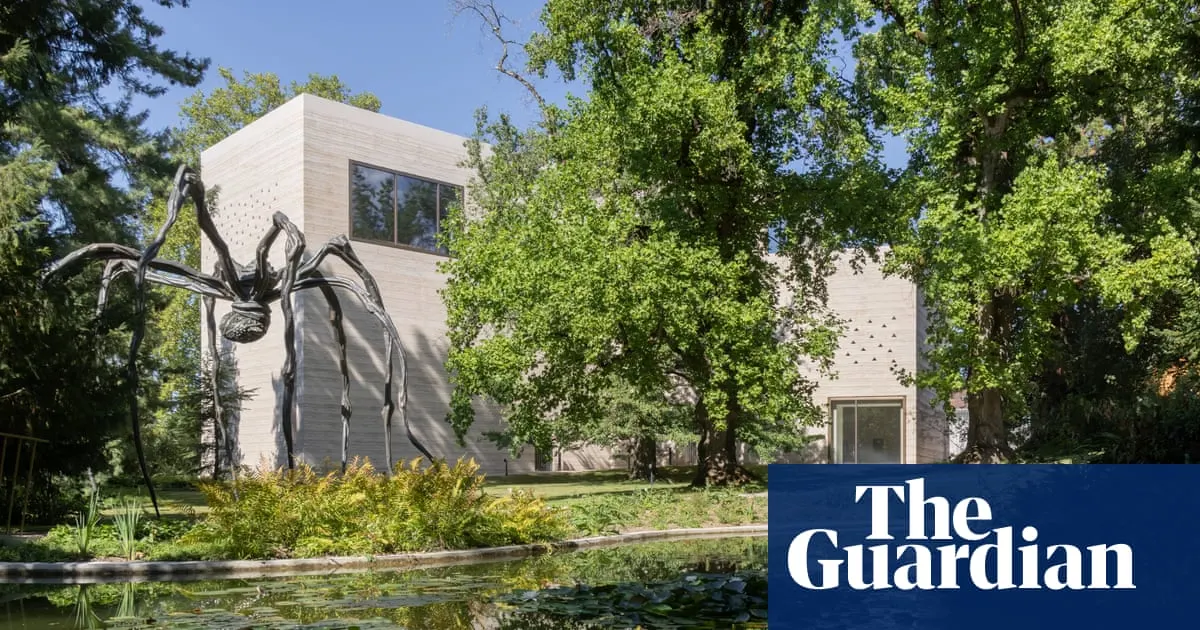
Peter Zumthor, the 83-year-old Swiss architect, has unveiled his first major project in his hometown of Basel: a £110m extension to the prestigious Beyeler Foundation, one of the world's finest art collections housing Monets, Mirós and Picassos. The monolithic, rammed-concrete structure raises a question about whether it is a worthy companion to the museum's celebrated 1997 Renzo Piano building, given its emphasis on bespoke handcrafted elements including leather-wrapped bronze doors and pear wood handrails. The challenge was significant: extending a museum already deemed nearly perfect by the art world.
Zumthor was selected from a shortlist of 11 architects in 2016 after 100 were initially approached. The extension rises in the newly acquired Iselin-Weber park, which doubles the museum's grounds. Beyond the main gallery, he designed a five-storey timber-clad office block and an open-access auditorium pavilion that does not require a museum ticket. Every element, from pear wood handrails to blown glass lamps, was meticulously handmade by local craftspeople, reflecting what Zumthor calls "Swiss pride in the well-built object"—a philosophy instilled by his father in his childhood workshop.
- Swiss architect Peter Zumthor's £110m concrete gallery extends the prestigious Beyeler Foundation
- Meticulous Swiss craftsmanship distinguishes every element: pear-wood handrails, blown-glass lamps, leather benches
- The extension doubles the museum's grounds and includes public-access pavilion spaces
New here? Start with this
The Beyeler Foundation is a prestigious art museum in Basel, Switzerland, with one of the world's finest private art collections including works by Monet, Miró and Picasso. The museum's existing building, designed by acclaimed Italian architect Renzo Piano and completed in 1997, is already regarded as a masterpiece, making any extension a formidable challenge.
Swiss architect Peter Zumthor, now 83, is known for his distinctive approach to design and materials. He was selected from 11 candidates in 2016 to design a major extension to the museum in his hometown of Basel, a project involving a £110m investment.
The new addition includes a monolithic concrete gallery space, a timber-clad office building, and an open-access auditorium pavilion that does not require a museum ticket. Every element was handcrafted by local artisans, from bronze doors and pear wood handrails to bespoke glass lamps, reflecting Zumthor's belief in meticulous craftsmanship and what he calls "Swiss pride in the well-built object".
Both sides, in good faith
The strongest fair case each way — we don't pick a winner.
The case for
The extension represents a genuine achievement by one of the world's most acclaimed architects, rigorously selected through international competition, whose philosophy of meticulous craftsmanship reflects serious thinking about how buildings are made and experienced. Rather than attempting to replicate Piano's approach, Zumthor creates a complementary structure with a distinct architectural language that respects the original building's integrity. The project also democratises cultural access through a free public pavilion and doubles the museum's grounds, expanding the institution's cultural mission beyond what the celebrated Piano building could achieve alone.
The case against
The Piano building achieved near-universal acclaim by striking a perfect balance in serving its collection; extending it risks disrupting this carefully calibrated harmony rather than enhancing it. Zumthor's monolithic concrete aesthetic represents a significant stylistic departure from Piano's refined modernism, which may create jarring contrast rather than harmonious dialogue between old and new. Whilst the handcrafted details demonstrate mastery, they risk appearing precious rather than serving the museum's primary mission of showcasing art, and the £110m investment raises legitimate questions about whether resources were allocated to create greatest cultural value.
Read the full article at the source →
Originally published by The Guardian as “‘If it’s too slick, it looks like a fashion mag’: Peter Zumthor on his £110m rammed concrete gallery”.