Jaguar launches Type 01 luxury EV priced £120k-£130k, targeting affluent young buyers amid brand repositioning
Developing story first seen 1 hour ago
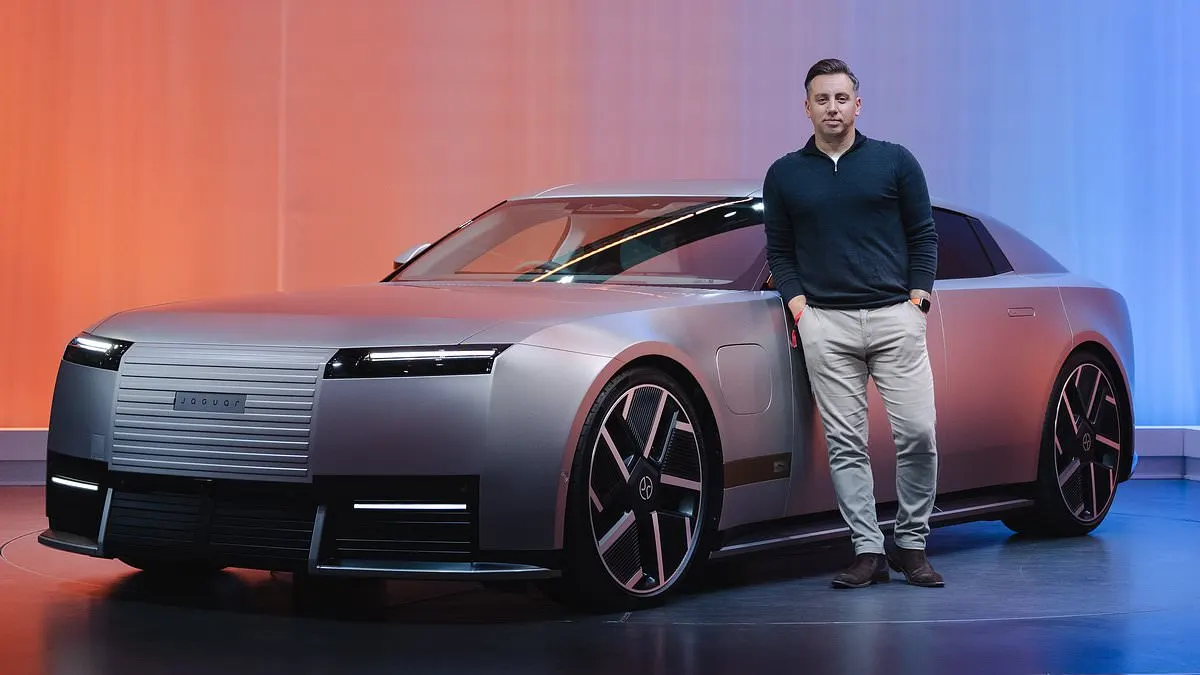
Jaguar has introduced the Type 01, a flagship all-electric grand tourer, as part of a sweeping strategic overhaul aimed at attracting wealthier, younger demographics to the struggling 90-year-old brand. The 5.2-metre four-door vehicle, priced between £120,000 and £130,000, represents a deliberate pivot away from the manufacturer's historical customer base, with a particular focus on affluent technology industry professionals in the United States following its New York launch.
The vehicle launch follows a controversial rebrand that saw Jaguar cease production of petrol and diesel vehicles, a move intended to stabilise finances after sustained sales declines. This repositioning strategy signals a significant departure from Jaguar's traditional luxury positioning, marking an attempt to secure the brand's long-term viability through electrification and demographic realignment rather than heritage-focused marketing.
- Jaguar debuts £120k-£130k Type 01 EV, targeting wealthy younger buyers in new brand direction
- Strategic shift follows controversial rebrand and years of declining sales, with emphasis on US tech market
- 5.2-metre grand tourer represents radical departure from traditional customer base and petrol-powered heritage
New here? Start with this
Jaguar is a long-established British luxury car manufacturer founded 90 years ago. The brand has recently struggled with declining sales and needed to adapt to remain competitive.
The company has now embarked on a major strategic shift: ceasing production of petrol and diesel vehicles and focusing instead on electric cars aimed at younger, affluent buyers. This represents a significant departure from how Jaguar has traditionally marketed itself, moving away from heritage-based messaging to attract a different demographic.
The Type 01 is the company's flagship electric vehicle under this new strategy, priced at £120,000-£130,000 and marketed particularly to wealthy technology professionals in the United States. The vehicle's launch represents Jaguar's commitment to this new direction and its attempt to establish itself as a manufacturer of luxury electric cars for a younger, more affluent audience.
Both sides, in good faith
The strongest fair case each way — we don't pick a winner.
The case for
Proponents of Jaguar's repositioning argue that the brand faced existential decline, with traditional petrol and diesel sales unable to sustain the business. They contend that a complete strategic pivot to the premium electric segment, targeting affluent younger demographics, offers the brand's genuine path to viability in an industry undergoing rapid transformation. Rather than attempting to serve a shrinking legacy market whilst building an electric future, a decisive realignment—whilst disruptive—creates a coherent, differentiated offering in the fastest-growing luxury segment.
The case against
Critics argue that Jaguar is unnecessarily discarding nearly a century of brand heritage and customer loyalty without demonstrable ability to capture its stated target market. They contend that the premium EV segment is crowded with established competitors, and that radical repositioning risks leaving Jaguar uniquely exposed—unable to serve its traditional base whilst lacking the pedigree or market position of dedicated EV manufacturers. A more gradual transition preserving connection to brand history might have better balanced heritage equity with electrification, rather than attempting wholesale reinvention.
Full account
Jaguar has unveiled its Type 01 electric grand tourer in New York, signalling the culmination of a two-year rebrand into a luxury, exclusively battery-powered manufacturer. The vehicle measures over 5.2 metres in length and weighs approximately 2.5 tonnes, presenting a commanding presence with its extended bonnet and proportionally low roofline of around 1.4 metres. The four-wheel-drive saloon delivers a 0-62mph acceleration time of 3.2 seconds and claims a top speed of 155mph, establishing itself as a performance-oriented offering within the electric luxury segment.
The Type 01will enter the market in early 2027 at a starting price between £120,000 and £130,000, with premium variants potentially reaching £150,000 or beyond. This represents approximately double the cost of Jaguar's preceding petrol and diesel models, reflecting an explicit strategy to reposition the brand upmarket and reduce sales volumes in exchange for higher profit margins. Company executives have projected that 85 per cent of purchasers will be new to the Jaguar brand entirely, underscoring the deliberate abandonment of its traditional customer base in favour of affluent, technologically-minded urban dwellers, particularly within the North American market.
The Type 01 targets younger, design-conscious consumers with substantial disposable income, particularly those from technology-sector backgrounds. Managing director Rawdon Glover characterised the intended buyer as someone making a deliberately bold aesthetic statement, acknowledging the vehicle's polarising visual design. The car's distinctive features—including the absence of a rear window and proportions that render it incompatible with standard UK parking infrastructure—underscore its American market orientation. The preceding rebranding campaign, which featured unconventional imagery and slogans such as 'Delete Ordinary' rather than showcasing the product itself, generated substantial criticism from political and business figures.
The launch occurs amid significant operational challenges for parent company Jaguar Land Rover, which faces mounting competition from Chinese manufacturers and has announced 4,000 redundancies to achieve cost savings. The organisation remains in recovery from a substantial cyber-security incident, whilst Type 01 personnel were included in voluntary redundancy schemes. The company has delayed the model's introduction to China by approximately two years despite recognising the market's strategic importance. The timing coincides with Land Rover's introduction of its own electric Range Rover variant at a higher price point, reflecting the broader automotive industry's transition towards premium electrified vehicles.
Where outlets differ
Pricing: Source 1 states 'around £120,000' whilst Source 2 specifies 'starting at £130,000'
Focus: Source 1 emphasises the controversial rebrand campaign and criticism from public figures; Source 2 prioritises Jaguar Land Rover's commercial difficulties and restructuring
Content: Source 1 details specific performance metrics and the loss of traditional branding elements; Source 2 emphasises UK infrastructure incompatibility and provides comparative pricing with Range Rover's electric model
Redundancies: Source 2 explicitly mentions voluntary redundancy for Type 01 staff; Source 1 does not address this
Coverage
- Daily Mail — Jaguar Type 01 finally revealed and we’ve driven the £120k EV – this is what it’s like
- The Guardian — Jaguar targets young Americans with Type 01 EV – but it’s too long for UK parking spaces
Americas Art Business Celebrity Culture Entertainment Markets Space Technology UK World