Jeffries threatens ‘serious response’ after Democrats help GOP advance anti-socialism vote
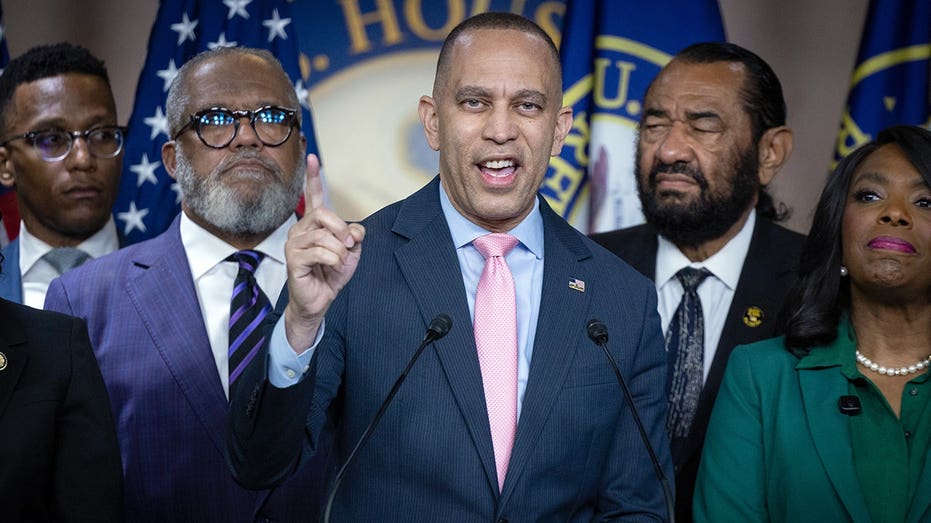
House Minority Leader Hakeem Jeffries has threatened a "serious response" against two fellow Democrats, Reps. Jared Golden of Maine and Marie Gluesenkamp Perez of Washington, after they joined Republicans to pass a procedural rule that advanced an anti-socialism resolution alongside other GOP-backed measures. The episode has exposed tensions within the Democratic caucus, with leadership referring the matter to the party's Committee on Caucus Rules for possible disciplinary action, while the two lawmakers defend their votes as driven by local economic concerns rather than party disloyalty.
The rule, H. Res. 1499, passed by a narrow 210-208 margin on Tuesday, with five Republicans voting against it, meaning it would have failed without the two Democratic votes. Golden said his vote was intended to advance his own bill, the Northeast Lobstermen Protection Act, which subsequently passed 219-196 and extends until 2035 a moratorium on regulations meant to protect the North Atlantic right whale, citing threats to Maine's lobster industry. Gluesenkamp Perez similarly framed her vote around support for working waterfronts, while Jeffries, Whip Katherine Clark and Caucus Chair Pete Aguilar had already issued a joint statement condemning the pair for "blindsiding" the caucus on a vote that was nearly defeated.
- Jeffries threatens discipline after two Democrats aid GOP procedural vote
- Rule passed 210-208, enabling anti-socialism resolution and other bills
- Golden, Gluesenkamp Perez cite local economic interests, not party defection
New here? Start with this
Democrats currently hold a minority in the House of Representatives, meaning Republicans usually need only their own party's votes to pass legislation, provided they do not lose too many of their own members. Hakeem Jeffries leads the House Democrats, and part of his role is keeping the party unified when Republicans bring forward bills that Democratic leaders oppose, including symbolic measures such as resolutions condemning socialism.
Procedural rule votes decide how and when a bill will be debated and are normally treated as a formality that lawmakers back along strict party lines, even if they later vote against the bill itself. Because Republicans hold only a slim majority, they can occasionally lose such votes if a handful of their own members defect, which is why the support of two Democrats proved decisive here. Jared Golden and Marie Gluesenkamp Perez represent districts with significant rural or working-class industries, and both have a history of breaking from their party on votes they judge to serve their constituents' economic interests.
This matters because it highlights ongoing friction between the Democratic Party's national leadership and moderate members representing more conservative-leaning districts, over how far individual lawmakers should go in prioritising local concerns over party unity. It also shows how narrow House majorities give small groups of lawmakers, from either party, outsized influence over what legislation reaches the floor.