Alito condemns Trump administration’s attacks on Supreme Court justices
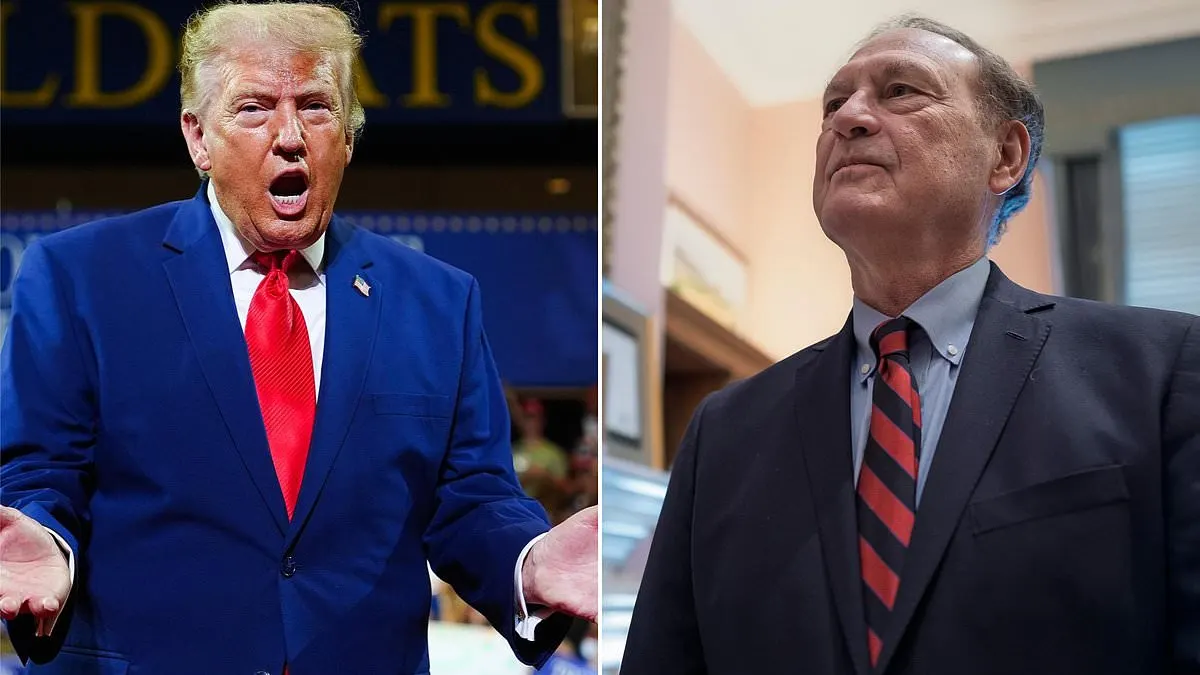
Supreme Court Justice Samuel Alito has publicly condemned the rhetoric used by President Trump and his Cabinet officials in their criticisms of the Court and its justices. In a rare public interview, Alito stated he is "not pleased" with the tone and language used to describe the Supreme Court's decisions and individual justices, noting that such discourse differs markedly from what was seen 15 years ago. Whilst Alito acknowledged that criticising the Court's substance is both valid and sometimes warranted, he drew a sharp distinction between substantive disagreement and what he views as inappropriate rhetorical attacks.
Alito made these remarks whilst discussing his new book, released this week, which collects his public remarks from 20 years on the Court. The conservative justice, appointed by President George W. Bush in 2006, firmly rejected suggestions that his rulings reflect Trump's political agenda or "MAGA" ideology, asserting he decides every case on the merits regardless of who occupies the presidency. He also noted the Court's growing "emergency docket" of applications, which he expects will continue to rise as long as presidents govern primarily through executive orders to bypass Congress.
- Alito condemns Trump administration's rhetoric targeting the Supreme Court.
- Justice rejects notion his rulings reflect Trump's political agenda.
- Court's emergency docket rising as presidents favour executive orders.
New here? Start with this
Samuel Alito is a conservative justice on the United States Supreme Court, appointed by President George W. Bush in 2006. In a rare public interview, he has expressed displeasure at how President Trump and members of his Cabinet have been criticising the Court and its justices. It is unusual for sitting justices to comment on contemporary political disputes, which is why such remarks from Alito are noteworthy.
Alito has drawn a distinction between two types of criticism: substantive disagreements with the Court's legal reasoning, which he considers valid, and what he characterises as inappropriate rhetorical attacks on the Court and individual justices. He observed that the tone of public discourse about the Court has become noticeably harsher in recent years compared with 15 years ago. These comments were made whilst Alito was discussing a new book collecting his public statements across two decades on the Court.
The context for this dispute includes suggestions that Alito's judicial decisions reflect the Trump administration's political agenda rather than being decided purely on legal grounds. There is also tension around the Supreme Court's growing "emergency docket", which handles applications seeking to bypass the normal judicial process. Alito noted that this docket is expected to expand as long as presidents rely on executive orders to advance their policies without seeking congressional approval.
Both sides, in good faith
The strongest fair case each way — we don't pick a winner.
The case for
Those defending vigorous criticism of the Supreme Court argue that robust accountability is essential to democracy. When officials believe the Court has erred consequentially, they have both the right and arguably the duty to voice strong disagreement about its decisions. The intensity of rhetoric often reflects the genuine stakes of what the Court decides for millions of people, and concerns about tone should not silence legitimate political discourse about judicial philosophy and institutional power. Substantive debate is how democracies maintain checks and balances.
The case against
Those supporting Alito's position contend there is a meaningful distinction between critiquing judicial decisions and making personal attacks on judges themselves. When executive officials employ inflammatory rhetoric against justices, it erodes public confidence in judicial independence and sets a dangerous precedent for treating institutions one disagrees with. A functioning democracy requires sufficient baseline civility and institutional respect for courts to function as neutral arbiters, even during sharp disagreements about specific rulings. Personal attacks on judges' motives or character fundamentally differ from substantive legal arguments and risk undermining the norms protecting judicial independence.
Read the full article at the source →
Originally published by Daily Mail as “Justice Alito ‘not pleased’ with Trump as he denounces ‘rhetoric’ aimed at Supreme Court”.