Leftist streamer sparks online firestorm over speech to College Dems in Mao-style suit: ‘They’re communists’
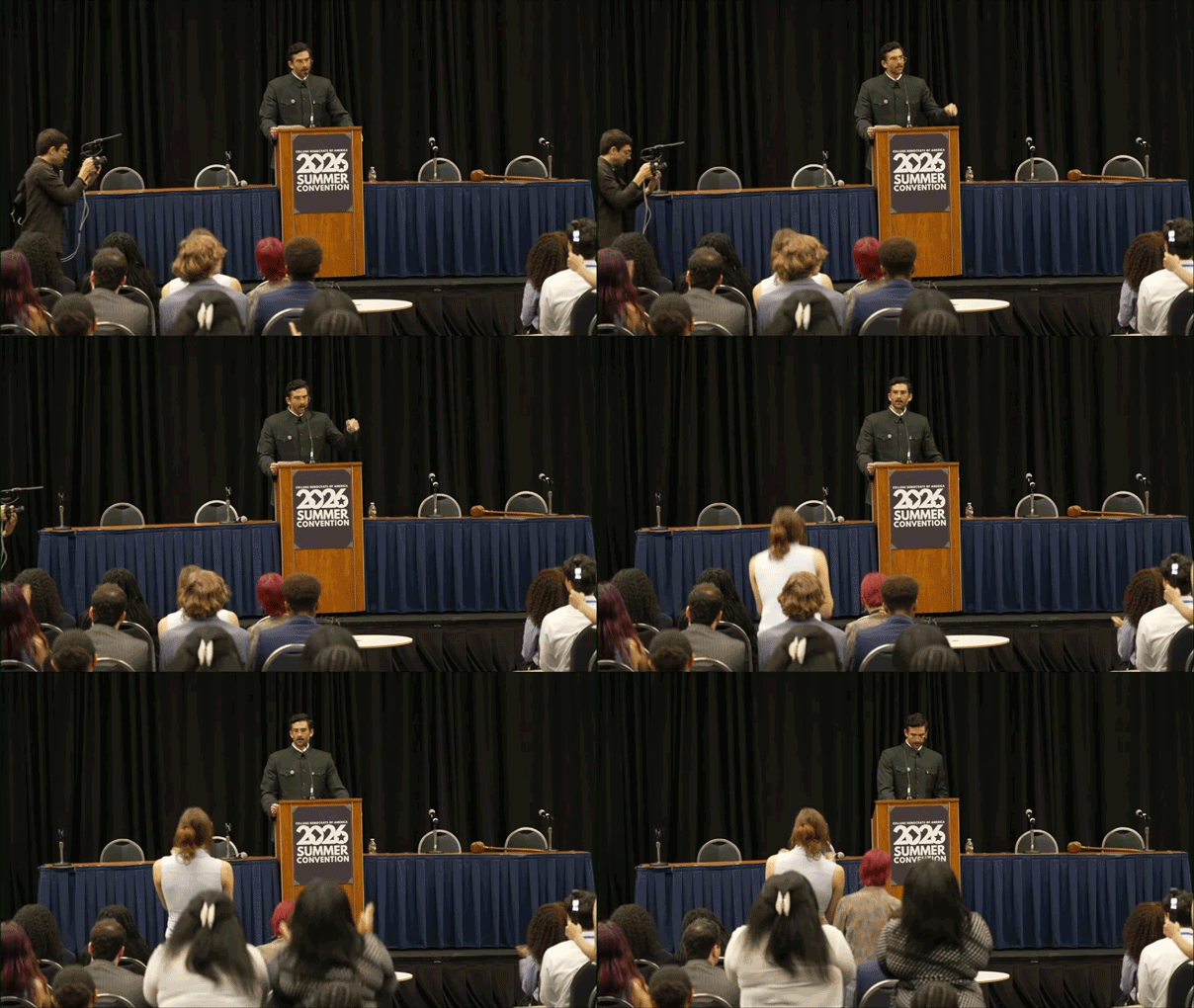
Left-wing streamer and political commentator Hasan Piker provoked a heated backlash after addressing the 2026 College Democrats of America Convention in Washington, D.C., while wearing an outfit resembling the attire of former Chinese communist leader Mao Zedong. In his speech, he called for an end to compromise within the Democratic Party, accusing moderate Democrats of collaborating with "fascists" and declaring there would be "no more" conciliation or betrayal from within the party's ranks.
The convention took place on 18 July, with footage of the address circulating widely online and drawing sharp criticism, particularly given Piker's choice of clothing evoking Mao's communist regime. His remarks and appearance fit into a wider pattern of intensifying tension between the Democratic Party's moderate and further-left factions, a divide that has also surfaced in recent disputes over Senate primary endorsements and progressive challenges to sitting lawmakers.
- Hasan Piker wore a Mao-style suit at a College Democrats convention.
- He urged Democrats to stop compromising, calling some colleagues fascist collaborators.
- The speech triggered strong online backlash and fuelled Democratic Party infighting.
Both sides, in good faith
The strongest fair case each way — we don't pick a winner.
The case for
Supporters of Piker's appearance argue that clothing and provocative rhetoric are a legitimate, time-honoured form of political satire and commentary, especially from an entertainer whose brand is built on irreverence and directness. They see the Mao suit as a knowing, tongue-in-cheek jab meant to provoke debate and mock right-wing caricatures of the left as secret communists, rather than a genuine endorsement of Maoism, and argue that audiences are sophisticated enough to read it as performance. From this view, treating a costume choice as a scandal risks stifling the kind of bold, attention-grabbing commentary that engages younger, disaffected voters and forces uncomfortable conversations about political labelling into the open.
The case against
Critics argue that donning the uniform of a leader responsible for tens of millions of deaths trivialises immense historical suffering and sends a genuinely troubling signal when delivered to an audience of aspiring party activists, regardless of any ironic intent. They contend that political communicators bear a responsibility not to blur the line between satire and endorsement, particularly given legitimate public concern about extremism creeping into mainstream political spaces, and that such imagery hands ammunition to opponents seeking to paint the whole movement as radical. On this view, the backlash reflects a reasonable expectation that public figures exercise better judgement about symbols with such a violent historical legacy, rather than an overreaction to a joke.