Michaël R. Roskam’s WWII Feature ‘Le Faux Soir’ To Close San Sebastián Film Festival
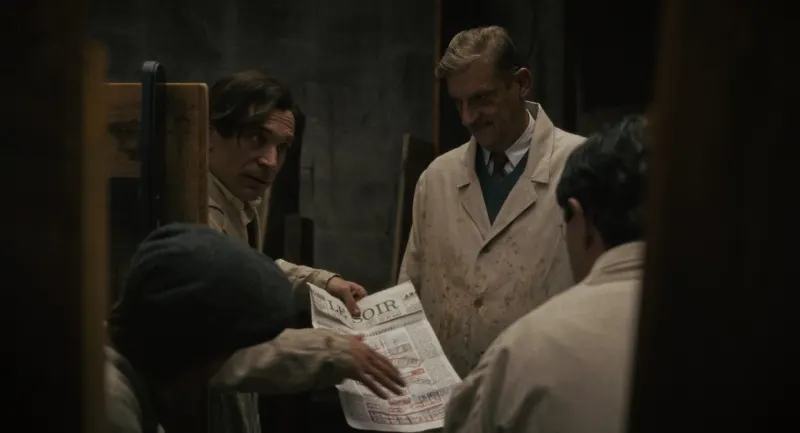
The San Sebastián Film Festival has selected "Le Faux Soir," a Second World War drama by Belgian director Michaël R. Roskam, to close its 2026 edition, which runs from 18 to 26 September. The film will screen at San Sebastián shortly after its debut at the Toronto International Film Festival, and its selection continues Roskam's long-standing relationship with the Spanish festival, where his 2014 film "The Drop" previously won the Jury Prize for Best Screenplay.
Based on Marie Istas's book "Le 'faux' Soir, 9 novembre 1943," the film is set during the Nazi occupation of Belgium and follows resistance fighters who print a fake edition of the newspaper Le Soir to mock their occupiers, in what some historians regard as the first-ever media hack. The cast includes Arieh Worthalter, Mélanie Thierry, Karim Leklou, Mara Taquin, Bouli Lanners, Julien Frison and François Damiens. Roskam, a former journalist, made his name with the Oscar-nominated "Bullhead" (2011) and has also directed "Racer and the Jailbird" (2017) and episodes of the miniseries "Black Bird" (2021).
- "Le Faux Soir" will close San Sebastián Film Festival, 18-26 September 2026
- WWII drama tells story of a fake Nazi-era newspaper edition
- Director Michaël R. Roskam has strong past ties to the festival
New here? Start with this
During the Second World War, Nazi Germany occupied Belgium and controlled public life, including what newspapers could publish. On 9 November 1943, Belgian resistance fighters produced a fake edition of Le Soir, a widely read newspaper then operating under German control, using it to ridicule the occupiers.
The film draws on a book by Marie Istas about that episode. Its director, Michaël R. Roskam, is a Belgian filmmaker and former journalist whose earlier film Bullhead was nominated for an Oscar. The story sits at the intersection of wartime resistance and the use of newspapers to shape public opinion.