Government orders 29 battery trains for northern rail network
Developing story first seen 2 hours ago
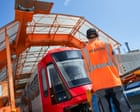
The government has provided further detail on its newly announced fleet of battery-powered trains for the north of England, including fuller comments from Prime Minister Andy Burnham and Transport Secretary Heidi Alexander. Burnham, who regularly travels by train between London and Manchester, said he had "lost count" of the times commuters complained to him about delayed or cancelled services, causing missed shifts, appointments and opportunities, and framed the new trains as proof that "Great British Railways" is delivering on its promise to fix rail basics. Alexander said passengers would be able to "wave goodbye" to overcrowded, delayed diesel trains in favour of faster electric ones.
The underlying announcement remains the 29 new Adessia Stream trains to be built at Alstom's Litchurch Lane works in Derby from 2028, supporting 350 local jobs and almost 6,000 nationwide, and entering service in 2034. They will be the first battery-powered trains used for long-distance mainline journeys in the UK, expected to increase network capacity by 30% over the next decade, run emission-free even on non-electrified track, and offer step-free boarding and onboard wifi, all as part of the government's wider Great British Railways overhaul.
- Government details 29 new battery trains for northern England's rail network
- Built in Derby from 2028, in service by 2034, 6,000 jobs backed
- Burnham and Alexander praise move as fixing unreliable, overcrowded services
New here? Start with this
Rail journeys across the north of England have long been dogged by ageing diesel trains, frequent delays and cancellations, particularly on routes not yet connected to the electrified network. This has been a persistent source of complaint for commuters, and successive governments have faced pressure to modernise services outside London and the south-east.
The trains at the centre of this story are part of Great British Railways, the government's overarching plan to overhaul and unify the rail network. Key figures involved include Prime Minister Andy Burnham and Transport Secretary Heidi Alexander, who are presenting the new trains as evidence that this wider reform programme is delivering tangible improvements. The trains themselves are being built by Alstom, a major rail manufacturer with a long-established factory in Derby.
Battery-powered trains matter because they can run without emissions even on stretches of track that have not been fitted with overhead electric wires, which is common across parts of the northern network. This means they can offer some of the benefits of electric trains, such as speed and lower emissions, without the cost and time needed to electrify every line first.
Both sides, in good faith
The strongest fair case each way — we don't pick a winner.
The case for
Supporters see this as a substantial and overdue investment in northern rail infrastructure, replacing ageing diesel stock with cleaner, faster trains that can run on non-electrified lines without the enormous cost and disruption of full electrification. They point to the tangible economic benefits, including hundreds of manufacturing jobs in Derby and thousands more in the supply chain, alongside a genuine capacity increase that could ease the overcrowding and delays commuters have long endured. For advocates of devolved transport policy, it also represents proof that Great British Railways can translate promises into concrete orders rather than more consultations.
The case against
Sceptics, while not necessarily opposed to better trains, question whether battery technology is the most efficient long-term solution compared with simply extending electrification, and worry that a 2034 in-service date means passengers enduring today's overcrowded, unreliable services will wait the best part of a decade for relief. They may also argue that an order of 29 trains is a modest fix relative to the scale of the north's rail problems, and caution against government announcements that emphasise ambitious framing and job figures while leaving key questions of overall cost, funding source and reliability of delivery timelines less thoroughly scrutinised.
Full account
The Government has confirmed plans for a new fleet of 29 battery-electric trains to serve the north of England, with construction due to begin at Alstom's Litchurch Lane factory in Derby from 2028. The trains, branded Adessia Stream, will be operated by TransPennine Express and are billed as the first battery-powered rolling stock built for long-distance mainline use in Britain. Ministers say the order, reported to be worth around £1 billion, will sustain roughly 350 jobs at the Derby plant and support close to 6,000 more across the wider UK supply chain.
Prime Minister Andy Burnham, a frequent rail traveller between London and Manchester, framed the announcement as a direct response to years of unreliable services, recalling how often commuters had complained to him about delayed or cancelled trains and the knock-on effect on missed shifts and appointments. He described the fleet as the start of faster, more dependable journeys across the north and tied the investment to the wider mission of Great British Railways, the new public body intended to bring the railway back under more coordinated control. Transport Secretary Heidi Alexander echoed the message, presenting the new trains as a marker of that organisation's ambitions to modernise services while supporting domestic manufacturing, and promising passengers an end to crowded, delayed diesel services in favour of cleaner, more modern electric travel.
Beyond job creation, the new trains are expected to bring practical improvements once they enter service, which is anticipated towards the end of 2034. Officials say the fleet will be capable of running without emissions even on stretches of track that lack overhead electrification, thanks to their battery power, and will boost capacity across trans-Pennine routes by around 30% within the next decade. The trains are also set to offer step-free boarding, additional wheelchair spaces, family-friendly carriages, space for bikes and buggies, and onboard wifi, addressing long-standing accessibility and comfort complaints on the route.
Coverage of the announcement varied in the level of operational detail provided. One report gave more precise figures on the expected time savings, citing reductions of up to ten minutes on journeys between Manchester and Leeds and as much as fourteen minutes between Manchester and York, and listed specific routes to benefit, including services linking Liverpool, Manchester Airport, Manchester Piccadilly, Scarborough, Saltburn and Hull. It also set out more of the financing structure, noting that the Government would invest directly in Alstom while the trains themselves would be purchased by rolling stock company Rock Rail and then leased to TransPennine Express, and touched on Burnham's broader comments about how economic policy for the north will be steered from a regional Downing Street office in Manchester even as the Treasury retains oversight of public finances. Other coverage placed greater emphasis on the jobs and manufacturing angle and the government's rhetorical framing of the announcement as proof of Great British Railways delivering on its founding promises, without detailing the financing arrangements or full list of routes affected.
Where outlets differ
Only one outlet cites a specific £1 billion cost for the scheme and details the financing structure (direct government investment in Alstom, with Rock Rail purchasing the trains for lease to TransPennine Express); the other omits cost and ownership details entirely.
One report gives precise journey-time savings (up to 10 minutes Manchester–Leeds, up to 14 minutes Manchester–York) and lists the specific routes to benefit; the other only cites a general 30% capacity increase without route-level detail.
One account includes an additional aside from Burnham about the Treasury retaining oversight of public finances while a regional Downing Street office in Manchester leads economic growth strategy — this is not mentioned in the other report and appears to be a broader remark not strictly tied to the train announcement.
There is a minor discrepancy in phrasing around timing: one source says the trains enter service in 2034, the other says rollout is expected by the end of 2034, and one frames the 30% capacity rise as occurring 'in the next decade' versus 'by the mid-2030s'.
More coverage
Read the full article at the source →
Originally published by The Guardian as “New battery-powered trains will ‘bring faster journeys to north’”.