Paramount seeks $1.9bn bond from states and WGA over merger delay
Developed over time first seen 2 months ago
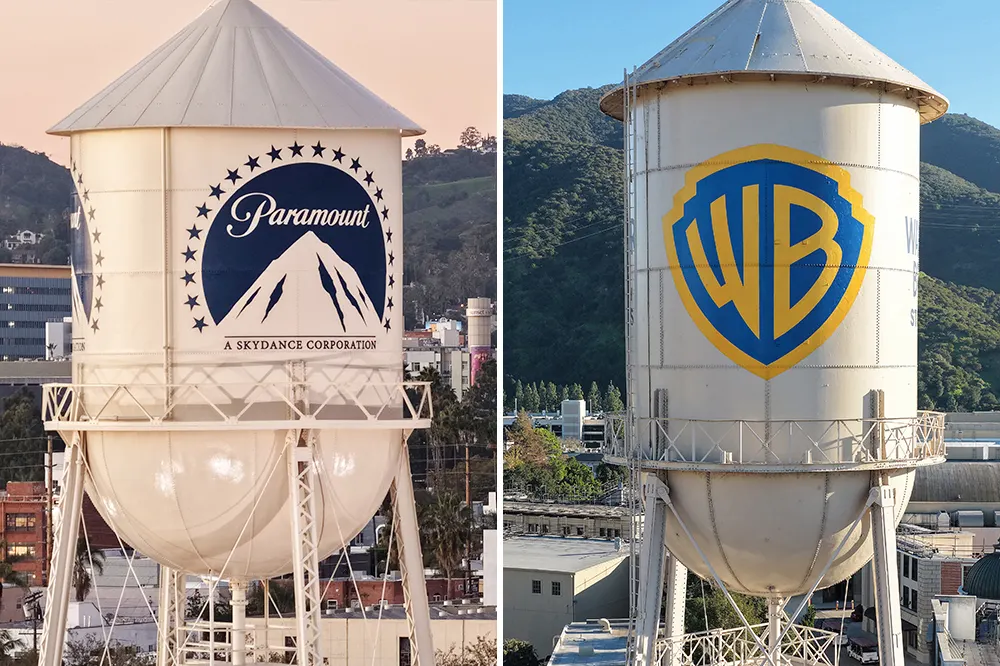
Paramount Skydance has asked the federal judge overseeing antitrust lawsuits against its $111 billion merger with Warner Bros. Discovery to force the 12 suing states and the Writers Guild of America to post a bond of roughly $1.88 billion. Paramount argued this would cover its financial losses caused by the delay to the deal, which it had voluntarily agreed to pause until the case is resolved. The move escalated tensions in a dispute that remains the last obstacle to closing the merger, which has already cleared regulatory approval in 68 jurisdictions, and drew a sharp rebuke from California's attorney general, who accused Paramount of trying to "blackmail" the plaintiffs.
Paramount filed the motion on Monday with Judge Araceli Martinez-Olguin, who has set a trial date of 2 March 2027, asking that the hold on the deal be lifted unless plaintiffs post exactly $1,884,726,092.73 by 30 September 2026. The states, led by California Attorney General Rob Bonta, sued in July alleging the merger would harm competition in theatrical films and cable TV, while the WGA separately argued it would reduce the number of buyers for writers' work. Martinez-Olguin had earlier waived a bond requirement when granting a temporary restraining order, ruling the states were suing to protect important public interests; Bonta's office called Paramount's new request a "do-over" of an agreement it entered "with eyes wide open." No further developments have since been reported, leaving the bond dispute unresolved ahead of the 2027 trial.
- Paramount seeks $1.88bn bond from states and WGA over merger delay
- California AG accuses Paramount of trying to "blackmail" plaintiffs
- Deal's only remaining hurdle; trial set for 2 March 2027
New here? Start with this
Paramount Skydance and Warner Bros. Discovery agreed a $111 billion merger, but the deal cannot close until an antitrust legal challenge is resolved. Twelve US states, led by California, are suing to block the merger on competition grounds, while the Writers Guild of America has raised similar concerns about a shrinking market for its members' work. Paramount agreed to pause the merger voluntarily while the case proceeds, even though it has already been cleared by regulators in most of the jurisdictions involved.
The case is being heard by a federal judge, with a trial date set for March 2027, meaning the dispute is likely to drag on for some time. Paramount is now trying to use the court process to pressure the states and the WGA over the cost of the delay, arguing that the wait is causing it significant financial harm. The plaintiffs argue they are pursuing the case to protect the public interest, and see Paramount's approach as an attempt to make the legal challenge too costly to sustain.
The outcome matters because it will help determine how much scrutiny large media mergers face from state governments and how effectively unions can intervene in corporate deals that affect their members. It also has direct consequences for two major entertainment companies, whose future size, market power and ownership structure hinge on how the case unfolds.
Both sides, in good faith
The strongest fair case each way — we don't pick a winner.
The case for
Advocates of Paramount's bond request argue that when litigants seek to freeze a lawful, already-approved transaction, they should bear some responsibility for the real financial harm that delay inflicts, just as bond requirements function in many injunction cases. They contend that without a meaningful bond, plaintiffs face little cost for pursuing a hold that could ultimately prove unfounded, while Paramount and its shareholders absorb mounting losses from a nearly $111 billion deal stalled for over a year. From this view, the request is not an attempt to silence legitimate concerns but a reasonable application of ordinary legal safeguards against open-ended delay.
The case against
Opponents argue that demanding close to $1.9 billion from state governments and a labour union would, in practice, price them out of pursuing a case the court itself deemed serious enough to justify a temporary restraining order without a bond. They point out that antitrust enforcement and worker advocacy serve a public interest that private litigants rarely bear the cost of, and that Paramount agreed to the delay knowingly rather than having it imposed against its wishes. On this view, imposing such a bond risks deterring legitimate challenges to mergers regardless of their merit, undermining the checks that antitrust law and collective bargaining protections are meant to provide.
More coverage
Art Business Companies Culture Markets Research Science
Read the full article at the source →
Originally published by Variety as “Paramount Requests States and WGA Be Required to Post $1.9 Billion Bond to Cover Financial Losses While Warner Bros. Merger Is Stuck on Hold Pending Trial”.