Populism poses serious challenge to independent central banks, Bailey says
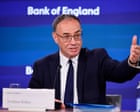
Bank of England governor Andrew Bailey has warned that rising populism poses a serious threat to the independence of central banks, saying policymakers must be ready to explain their decisions publicly or risk being branded an "unrepresentative elite". Speaking at an LSE conference as Reform UK held its annual gathering in Birmingham, Bailey argued that populist movements often claim to alone represent the "authentic will of the people", casting independent institutions as obstacles to popular sovereignty. His remarks come amid growing attacks on central bank independence from populist politicians on both sides of the Atlantic, including Nigel Farage, who has suggested he would replace Bailey if Reform won power, and Donald Trump's repeated criticism of former US Federal Reserve chair Jerome Powell.
Bailey, who was among central bankers who signed a joint statement defending Powell, said the Bank's independence—granted by Labour in 1997 and expanded after the 2008 financial crisis—had strengthened its ability to maintain economic stability, while acknowledging that institutions wielding significant authority "should expect scrutiny". His comments come as the Bank's rate-setting committee remains split over how to respond to inflation driven by the Iran war; rates were held at 3.75% in July, though three of nine members, including chief economist Huw Pill, voted for an increase. Attention now turns to the Bank's next meeting on 17 September, when it is expected to decide on continuing its contested quantitative tightening programme, which critics say raises government borrowing costs.
- Bailey says populism threatens central bank independence and legitimacy
- Warns institutions risk being seen as an "unrepresentative elite"
- MPC split on rates; QT decision due at 17 September meeting