Cambridge pub linked to Pink Floyd saved, but overshadowed by vast office scheme
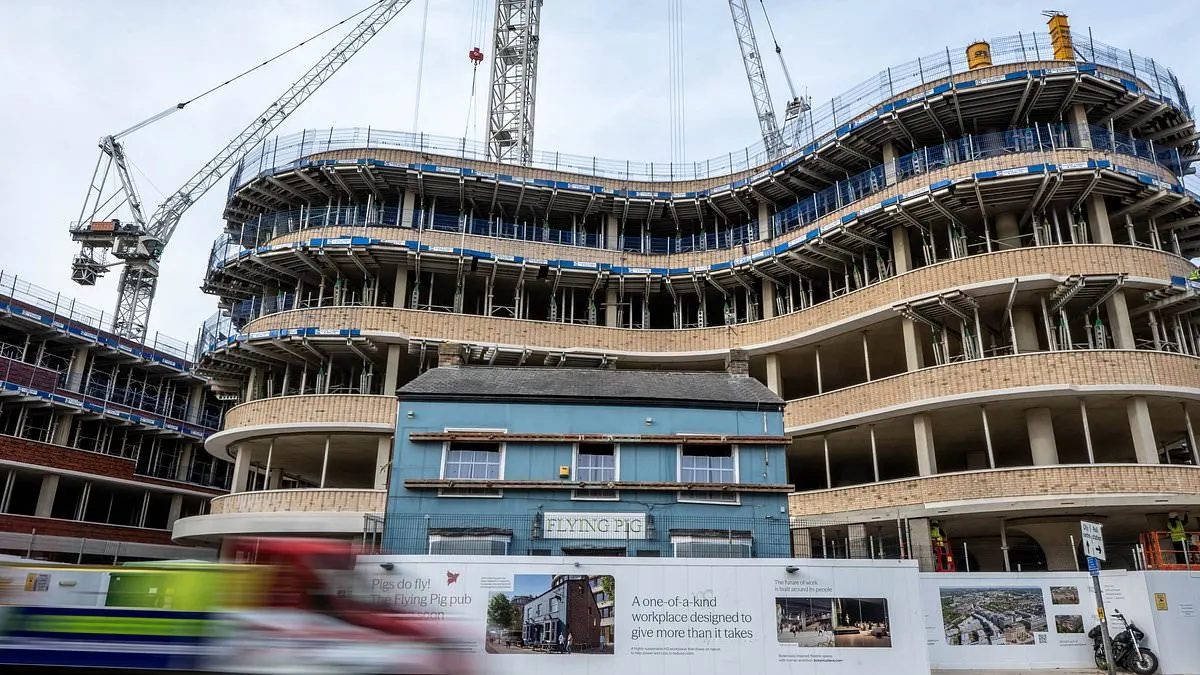
The Flying Pig in Cambridge, known as an early meeting place for Pink Floyd members and a long-standing live music pub, has been retained after plans to demolish it were changed following public pressure. It will sit beside a £500 million office development more than 100 feet high, which the former landlady says has overwhelmed the pub and its surroundings.
The pub’s history on the site dates back to at least 1844, and Syd Barrett is said to have met future guitarist David Gilmour there. A petition against demolition attracted 14,500 signatures; the pub closed in October 2021, with around 20 per cent of the building said to remain. Developers plan to refurbish it as a 2,090 sq ft pub with a 1,890 sq ft beer garden, reopening alongside the 500,000 sq ft Botanic Place scheme in early 2028.
- The Flying Pig was saved after 14,500 people signed a petition.
- A 105-foot office block now looms beside the Cambridge pub.
- The refurbished pub is expected to reopen in early 2028.
New here? Start with this
The Flying Pig is a Cambridge pub with recorded history dating to at least 1844. It is noted in British rock music as an early meeting place for Pink Floyd members, with the band's founder Syd Barrett said to have encountered future guitarist David Gilmour there.
The pub closed in 2021 when it faced demolition as part of local redevelopment plans. A public campaign against the demolition collected more than 14,000 signatures, leading developers to alter their plans and retain the building.
The pub will be refurbished and reopen in 2028 as part of the new development scheme. The preservation of the historic venue followed the community campaign against its destruction.
Both sides, in good faith
The strongest fair case each way — we don't pick a winner.
The case for
The retention of the Flying Pig demonstrates that heritage conservation and urban regeneration need not be mutually exclusive. Cambridge requires significant investment to maintain economic viability and employment; the pub's refurbishment and reopening within this mixed-use development represents a pragmatic balance that ensures the venue survives as an active public space. The scheme generates essential jobs and revenue whilst respecting the building's historical importance.
The case against
Genuine heritage protection must safeguard not merely a building's physical structure but the context that gave it cultural meaning. Surrounding an intimate historic venue with a 500,000 sq ft commercial complex fundamentally diminishes what made the Flying Pig culturally significant—its organic place in Cambridge's creative life. Retaining the walls whilst the surrounding development overwhelms the venue represents conservation in form rather than in substance.
Read the full article at the source →
Originally published by Daily Mail as “Pub famed for being birthplace of Pink Floyd is saved from the bulldozers – only to be dwarfed by huge £500million office development”.