Research roundup: 7 cool science stories we almost missed
Ars Technica's monthly research roundup gathers seven notable science stories from August that didn't get full coverage elsewhere, spanning astrophysics, biology and materials science.
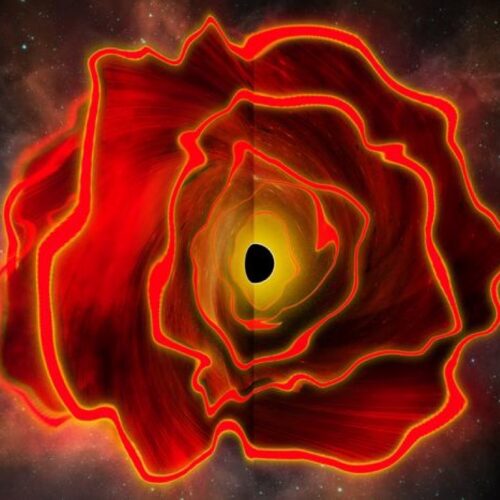
– Astronomers using James Webb Space Telescope data identified a new type of object dubbed a "black hole star" (named MoM-BH*-1) — a star-sized object roughly 100 billion times brighter than a star, explained by a ~100-solar-mass black hole wrapped in a dense hydrogen cocoon; the findings, published in Nature, may help explain how supermassive black holes formed so early in the Universe's history.
– Scientists at Southern Illinois University used engineered yeast to break down PET plastic bottles and convert the material into an edible cookie, intended as a potential food source for astronauts, submariners or future Moon/Mars colonists.
– Researchers explored a link between whale calls and Einstein's special theory of relativity.
– Other findings covered how avocado tree flowers switch sex during the course of a day.
– The roundup includes further stories, including one on tiny sound-powered drones, that were not detailed in the excerpt available.
- Webb telescope data reveals a new "black hole star" object
- Engineered yeast turns plastic bottles into edible cookies
- Roundup also covers whale calls, avocado flower sex-switching