Scientists enable dual genetic codes within a single cell
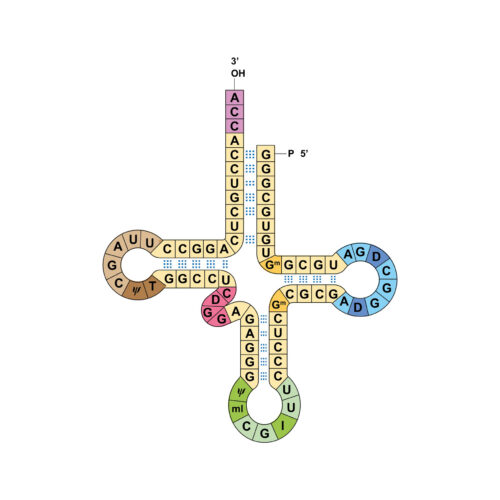
Scientists led by synthetic biologist George Church have devised a way to run two genetic codes simultaneously within a cell, potentially removing a major obstacle to engineering organisms with expanded amino acid repertoires. Every living thing relies on the same genetic code to translate DNA into proteins, and altering it has traditionally required painstaking, genome-wide edits, since changes to the code affect every gene at once. The new approach avoids this by exploiting a quirk of the ribosome, the cellular machine that reads messenger RNA and assembles proteins, so that an alternative code can operate alongside the standard one without disrupting existing genes.
The method builds on earlier, more laborious efforts in which researchers added new amino acids to bacteria or engineered proteins with one fewer amino acid, sometimes needing to re-engineer every gene in a bacterial genome to compensate. Church's team instead found that only certain ribosomal RNA base-pairing regions need to be altered, sidestepping the need to rewrite the whole genome. The technique has not yet been tested in a living cell and may encounter complications there, but the researchers, who also developed automated systems to speed up testing, believe it should still significantly accelerate synthetic biology research into artificial amino acids and alternative genetic codes.
- Researchers devised a way to run two genetic codes in one cell simultaneously
- Method avoids editing every gene, unlike previous laborious approaches
- Not yet tested in living cells, but could speed up synthetic biology work
Read the full article at the source →
Originally published by Ars Technica as “Researchers get two genetic codes to work at the same time”.