Ring unveils smart lock powered by a hand-cranked wheel
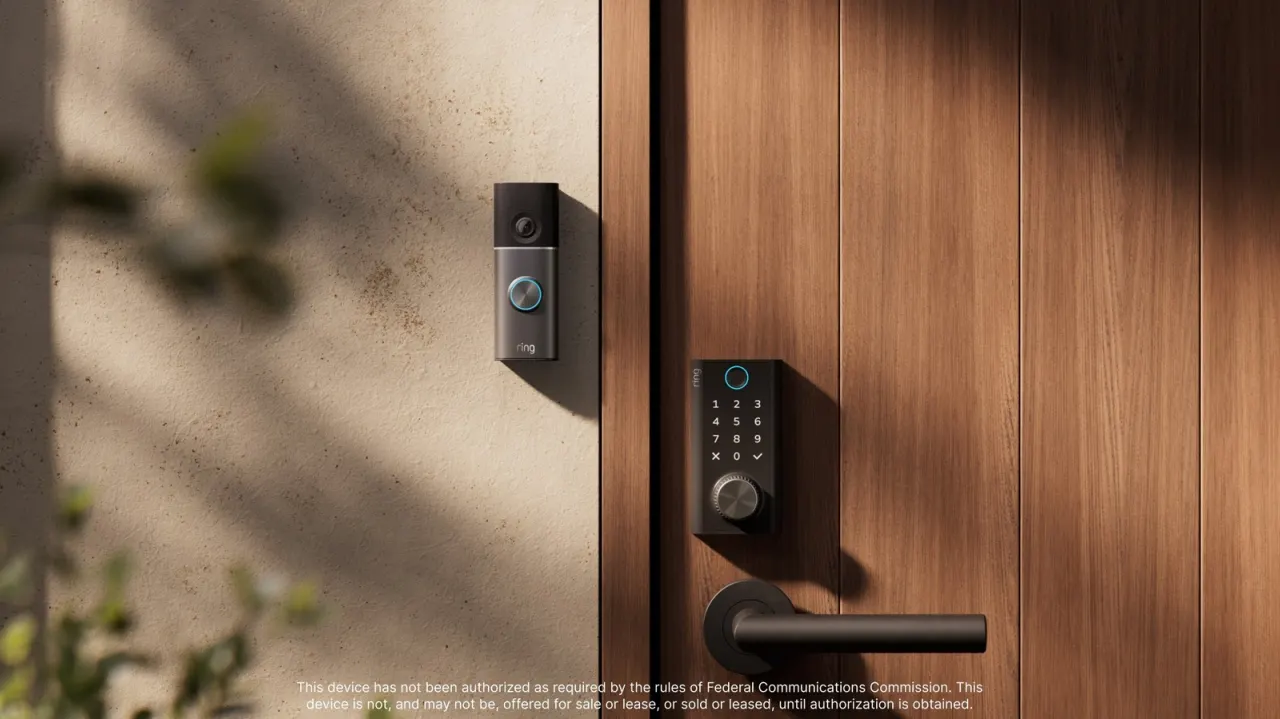
Ring has unveiled a smart lock designed to keep working when its battery runs flat, using a hand-cranked wheel to generate power. The feature addresses concerns that a powered lock could leave people unable to enter their homes, and may also suit places such as remote cabins that are used infrequently.
Turning the front wheel back and forth three or four times powers the lock for about 30 seconds, enough to use its fingerprint reader, keypad, app or Alexa. Ring says the battery should last a year per charge; the lock is planned for early 2027 at $249, in black, silver and brass, and requires no extra wiring. Ring also announced four more Retinal 4K cameras and a 2K indoor camera that pans 360 degrees, tilts 175 degrees and follows motion.
- A hand crank powers Ring’s smart lock for about 30 seconds.
- The $249 lock is expected in early 2027.
- Ring also announced five new cameras.
New here? Start with this
Ring is a company that makes smart home security products. A smart lock is an electronic lock that can be opened via smartphone apps, voice commands, or biometric features like fingerprints, rather than a traditional key.
As smart locks become more popular, a significant concern has emerged: what happens if the battery dies? This is particularly worrying for remote properties or homes with infrequent use, where a dead battery could leave owners locked out for days or longer.
Ring's new smart lock includes a hand-cranked wheel on its front that generates power when the battery runs flat. Turning the wheel just a few times produces enough power for about 30 seconds of operation, sufficient to use any of the lock's methods to gain entry.
Both sides, in good faith
The strongest fair case each way — we don't pick a winner.
The case for
The innovation solves a genuine practical problem that smart lock users face—battery failure leaving them unable to enter their homes. The hand-crank backup is simple, requires no additional infrastructure, and represents Ring responding thoughtfully to legitimate user concerns. For remote properties and busy households, this advancement makes smart locks more dependable and trustworthy.
The case against
Whilst the feature itself is practical, the story uncritically celebrates further innovation in smart lock technology without addressing substantial privacy and security concerns that many people reasonably hold about corporate-controlled home access systems. Rather than questioning whether embedding homes in surveillance-enabled, data-collecting systems serves the public interest, the narrative focuses on making them more appealing and convenient, encouraging adoption of technologies that privacy-conscious people rightly view with scepticism.
Read the full article at the source →
Originally published by Engadget as “Ring’s smart lock has a hand crank so it works even if the power’s out”.