London police set strict limits on student march marking 7 October attacks
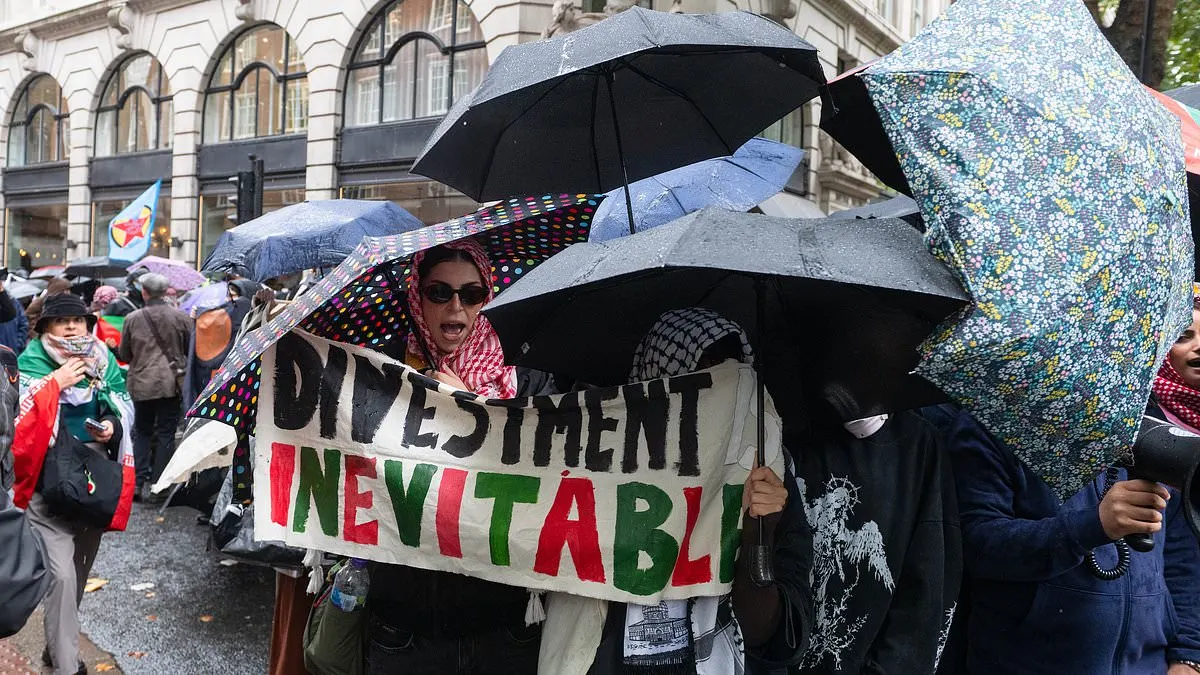
A pro-Palestinian student march organised by "The University of London Coalition" took place in central London on the third anniversary of the October 7 attacks. The demonstration of approximately 150 marchers called for an end to Israeli military operations in Gaza and the ending of the Israeli state. The march proved controversial due to its timing on the anniversary of an attack that resulted in 1,200 civilian deaths, with government officials having previously called for it to be cancelled.
The Metropolitan Police imposed conditions on the protest rather than banning it, including a 90-minute duration, designated route from Lincoln's Inn to Russell Square, and a ban on face coverings. A larger counter-demonstration organised by Stop The Hate also gathered, leading police to position officers between the two groups. Several marchers reportedly wore umbrellas, sunglasses and masks to obscure their identities despite the face-covering ban.
- Pro-Palestinian student march held on October 7 anniversary despite government calls for cancellation
- Approximately 150 marchers called for end to Israeli state and Gaza operations
- Police imposed conditions including face-covering ban and positioned officers between competing demonstrations
New here? Start with this
October 7 marks the anniversary of a 2023 attack on Israel by Hamas, a Palestinian militant group, in which approximately 1,200 civilians were killed. Israel responded with military operations in Gaza. The conflict has become deeply divisive, generating protests and counterprotests across the world.
A group of university students in London organised a march on this anniversary to call for an end to Israeli military operations in Gaza. The timing of the protest on the anniversary of the October 7 attack proved controversial, with some government officials calling for the march to be cancelled beforehand.
The Metropolitan Police imposed strict conditions on the march, limiting its duration to 90 minutes and restricting its route through central London, instead of banning it outright. A rival counter-demonstration was also organised in the same area, leading police to manage the two groups separately.
Both sides, in good faith
The strongest fair case each way — we don't pick a winner.
The case for
Fundamental to democratic society is the right to peaceful protest and free assembly, even when the message is unpopular or the timing is controversial. Police and government should not curtail such rights based on political content or the sensitivity of the date; democratic freedoms must protect dissenting voices most of all. Police conditions significantly restrict the protest—a 90-minute limit, designated route, and face-covering ban are substantial burdens that risk deterring legitimate participation. Citizens must be able to voice political demands, however controversial, through peaceful assembly.
The case against
Public order and community cohesion are legitimate and pressing concerns that authorities must address. Deliberately organising a large demonstration on the anniversary of an attack that killed 1,200 civilians, whilst calling for the end of an entire nation, is inflammatory and risks provoking serious disorder and intercommunal violence. Police conditions represent a reasonable middle ground that respects the right to protest whilst protecting public safety; the violation of restrictions by some marchers demonstrates why such measures are necessary. Democratic freedoms operate within a framework of social responsibility, and timing and manner can appropriately be regulated when there is genuine risk of harm.
Read the full article at the source →
Originally published by Daily Mail as “ROBERT HARDMAN: Hiding behind umbrellas, the ghouls marching for Hamas on the October 7th anniversary…”.