Russian online retail warehouses hit by deadly Ukrainian strikes
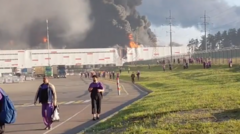
Ukrainian forces conducted coordinated drone strikes against two warehouses operated by Wildberries, Russia's largest online retailer, resulting in eight deaths and 62 wounded. The majority of casualties occurred at the Tambov facility, where night-shift workers were present when the strikes hit. Russian regional officials confirmed casualty figures and reported that air defence systems intercepted numerous incoming drones overnight.
Ukrainian President Zelensky characterised the operation as targeting facilities that supplied sanctioned electronics and navigation equipment for drone production, and framed it as retaliation for Russian strikes on Ukrainian civilian infrastructure. Ukrainian officials alleged Wildberries' platform facilitated military equipment procurement. Russia's response emphasised the civilian toll and successful interception of incoming weapons, whilst Ukrainian authorities stressed the facility's role in supporting Russian military logistics. The strikes exemplify the conflict's expansion into economic infrastructure, with both sides targeting assets deemed critical to opposing military operations.
In short
- Ukrainian drone strikes killed 8 and wounded 62 workers at two Wildberries warehouses in Tambov and Moscow region
- Ukraine claims the facilities supplied sanctioned military components and drone parts; Russia reports intercepting dozens of drones but confirms significant civilian casualties
- Attack framed as retaliation for Russian strikes on Ukrainian civilians; reflects broader conflict tactic of targeting economic infrastructure
Steelman: both sides, in good faith
The strongest fair case each way — we don't pick a winner.
The case for
The case for these strikes rests on the contention that the warehouses constituted legitimate military infrastructure, supplying critical electronics and navigation components for Russian drone production and directly enabling attacks on Ukrainian civilians. Proponents argue that Russia's mobilisation of its civilian economy for military purposes, combined with its sustained strikes on Ukrainian population centres, justifies degrading such military supply chains as a proportional and necessary response within the context of total war.
The case against
Critics contend that Wildberries operates primarily as a civilian retail operation with civilian workers, and that striking civilian infrastructure resulting in eight deaths raises serious questions about proportionality and compliance with international humanitarian law's principles of distinction. Even granting that some military-related goods may pass through the facility, they argue that the fundamental civilian nature of the operation and the loss of civilian life cannot be justified by disputed claims about military utility, especially when alternatives might have minimised civilian harm.
Explained simply
Russia invaded Ukraine in 2022, beginning a war that has gradually expanded beyond the front lines. Both sides now conduct strikes on economic infrastructure they believe supports the opposing military operations.
Wildberries is Russia's largest online retail platform, serving millions of Russian customers. Ukraine claims such commercial platforms have been used to acquire sanctioned electronics and components that feed into Russian military manufacturing and weapons production.
The war increasingly blurs the distinction between military and civilian infrastructure. A key point of dispute between Ukraine and Russia concerns whether commercial enterprises facilitating military supply chains constitute legitimate military targets.
Europe Geopolitics Politics World