Saudi aircraft support Yemen government offensive against Houthi-held territory
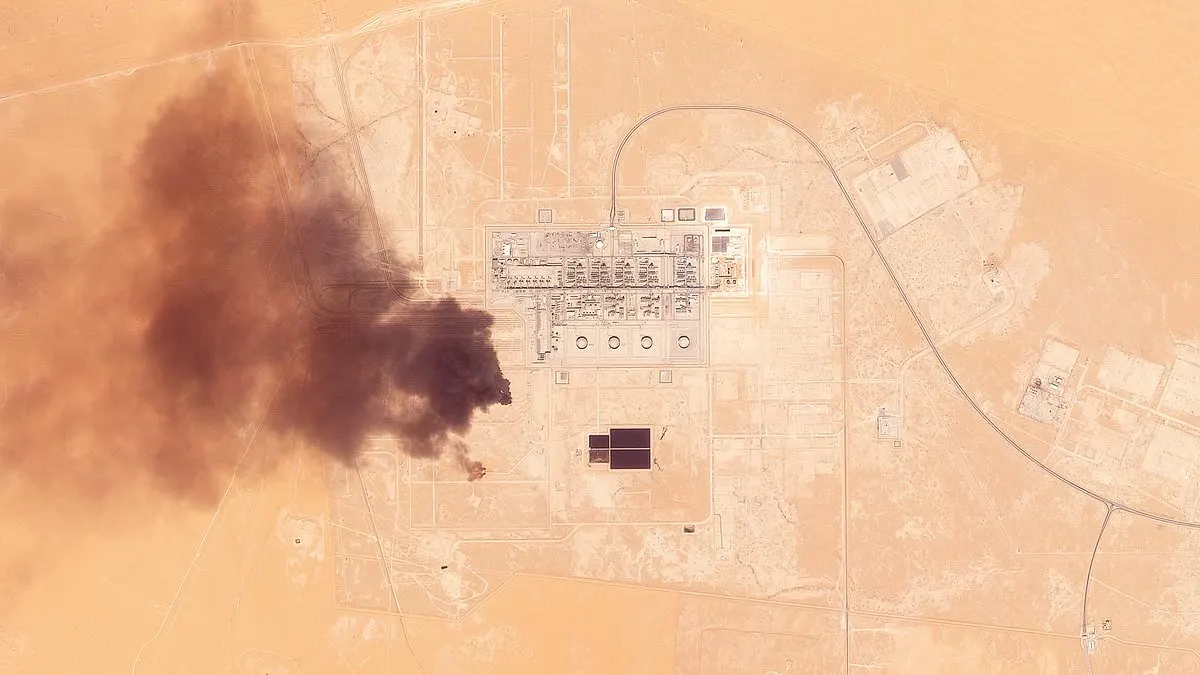
Yemen’s government has launched an offensive to retake territory held by the Houthis, with support from Saudi-led coalition air strikes. The campaign matters beyond Yemen because recent Houthi advances near the Red Sea and Bab al-Mandab shipping route, alongside disruption to Saudi oil infrastructure, have added pressure to energy supplies during the wider Middle East war.
Yemen’s military said it had carried out more than 1,000 strikes, while the coalition said 100 aircraft flew at dawn in “Operation Dawn of Yemen”. The Houthis have made gains along the coast and cut a key supply route to Taiz, effectively encircling the government-held city; UN figures cited in the article say their September offensive displaced more than 145,000 people. The article also reports that an attack halted pumping on Saudi Arabia’s East-West pipeline and quotes Aramco’s chief executive warning that global oil stockpiles are “scarily thin”.
- Yemen’s government has begun an offensive against Houthi-held territory.
- The Saudi-led coalition says 100 aircraft joined dawn strikes.
- Houthi gains threaten Taiz and key regional energy routes.
New here? Start with this
Yemen has been in conflict for several years between its internationally recognised government and the Houthis, a rebel group based in the north. The Houthis have taken control of significant territory in Yemen, whilst Saudi Arabia and allied states have intervened militarily to support the government.
This conflict matters beyond Yemen because it threatens critical global trade and energy routes. The Red Sea and Bab al-Mandab strait, which pass through Yemeni waters, are major shipping passages for oil and cargo between Asia and Europe. Houthi attacks on ships and Saudi oil infrastructure have disrupted these supplies, affecting energy prices and global commerce.
Yemen's conflict is part of broader military tensions in the Middle East that have intensified in recent months. Both the Houthis and the government-backed coalition seek to control territory, particularly areas commanding strategic shipping routes.
Both sides, in good faith
The strongest fair case each way — we don't pick a winner.
The case for
The Houthis present an escalating military threat, having captured territory, cut supply routes, and attacked critical infrastructure including Saudi oil pipelines. A military offensive is justified to restore the government's territorial control, protect vital Red Sea shipping lanes, and prevent further destabilisation of a region whose energy production affects global markets. Without active pressure to halt Houthi advances, their expanding control will continue threatening international commerce and regional security.
The case against
Military campaigns in Yemen have consistently failed to achieve lasting solutions whilst inflicting severe humanitarian costs, with a single month's operations displacing over 145,000 civilians. Air strikes destroy infrastructure and fuel grievances without addressing the political problems that generate Houthi support. Sustainable stability requires diplomatic negotiation and addressing root causes of conflict, not military operations that perpetuate cycles of violence and displacement.
Americas Art Culture Elections Government Middle East Politics World
Read the full article at the source →
Originally published by Daily Mail as “Saudi coalition backs Yemen government offensive with 100 warplanes taking part in dawn strikes against Iran-backed Houthis”.