Rapid caldera collapse made Tonga eruption unusually tsunami-prone
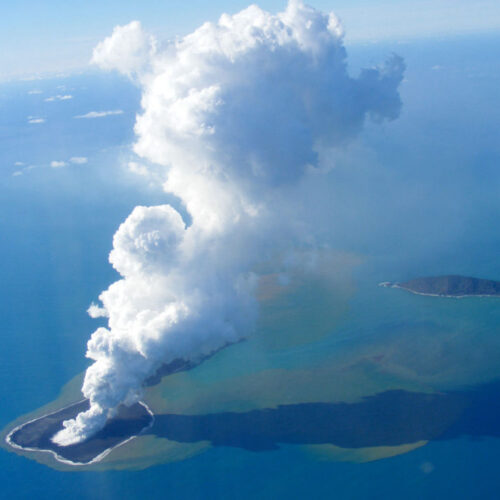
Researchers say the 2022 eruption of Tonga’s Hunga volcano produced an exceptionally powerful tsunami partly because its caldera collapsed rapidly. The findings suggest that even relatively small underwater volcanoes can generate dangerous tsunamis when sudden seafloor collapse displaces large volumes of seawater, highlighting a hazard that remains poorly understood.
Comparing pre- and post-eruption seafloor maps, the team found that Hunga’s roughly four-kilometre-wide caldera sank by about one kilometre. The eruption column exceeded 55 kilometres, while the resulting tsunami reached an estimated 40 metres within 100 kilometres of the volcano—the highest recorded from an underwater volcanic eruption. Researchers believe the volcano’s shallow, broad magma reservoir and thin roof allowed the collapse to begin after losing only about a quarter of its magma.
- Rapid caldera collapse may amplify volcanic tsunamis.
- Hunga’s tsunami reached about 40 metres.
- Small submarine volcanoes may pose serious risks.
Read the full article at the source →
Originally published by Ars Technica as “Small undersea volcanoes may unleash outsized tsunamis”.