Spanish police clear Ceuta beach where 3,000 migrants had set up camp ahead of visit by royal family
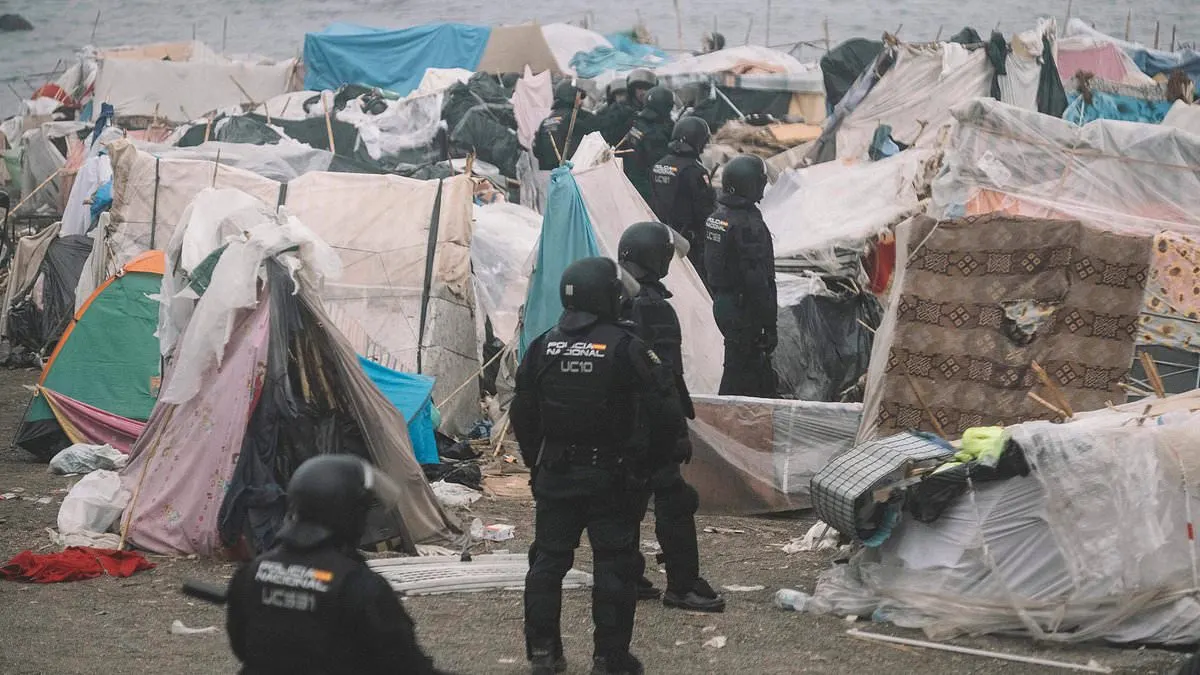
Spanish police have evacuated 3,000 migrants from a makeshift camp on Ceuta's Trampolin beach, relocating them to temporary accommodation ahead of King Felipe and Queen Letizia's visit to the Spanish North African enclave on 13-14 October. The clearance removes a visible migrant presence from the city, which has been strained by the arrival of tens of thousands of migrants from Morocco over the past months.
More than 72,000 migrants crossed from Morocco into Ceuta in late July, though most have since returned; approximately 10,000 remain. The clearance operation comes amid tensions in the enclave and reports of excessive force by Spanish soldiers against migrants, with videos published by local media showing alleged beatings and rough treatment, prompting the Spanish government to announce an investigation.
- 3,000 migrants cleared from Ceuta ahead of royal family visit
- Spanish soldiers face investigation over alleged excessive force against migrants
- Ceuta strained by 72,000 migrant arrivals from Morocco since July
New here? Start with this
Ceuta is a Spanish enclave located on Morocco's northern coast, and serves as one of the primary land routes through which migrants from Africa attempt to reach Europe. It has traditionally been used as a crossing point by migrants, but arrivals have increased significantly in recent months. People from across Africa and beyond are drawn to Ceuta, viewing it as a gateway to Spain and the wider European Union.
In late July 2026, more than 72,000 migrants crossed from Morocco into Ceuta within a short period, overwhelming the enclave's limited capacity and infrastructure. Though many have subsequently left or been relocated, approximately 10,000 remain, with some living in makeshift camps and temporary shelters. The large migrant presence has become a significant political issue in Spain and beyond, highlighting broader debates about European border management and migration policy.
Both sides, in good faith
The strongest fair case each way — we don't pick a winner.
The case for
Ceuta has faced genuine logistical strain from the arrival of tens of thousands of migrants, and a camp of 3,000 people presents real challenges for service provision and public health. Preparing the city for a state visit involves standard procedures, and crucially, the migrants were relocated to proper temporary accommodation rather than simply dispersed. The authorities' commitment to investigating reported allegations of excessive force indicates that accountability mechanisms are functioning, suggesting institutional recognition of the need for appropriate conduct during operations.
The case against
The timing of the clearance specifically ahead of a royal visit suggests the primary motivation is managing public perception rather than addressing public order on independent grounds. Combined with documented allegations of excessive force by Spanish forces reported by local media, this raises concerns that vulnerable migrants are being displaced to render the enclave's migration challenge invisible rather than managed through coherent, dignified policy.