Supporters of jailed ex-PM Imran Khan march to Pakistan capital
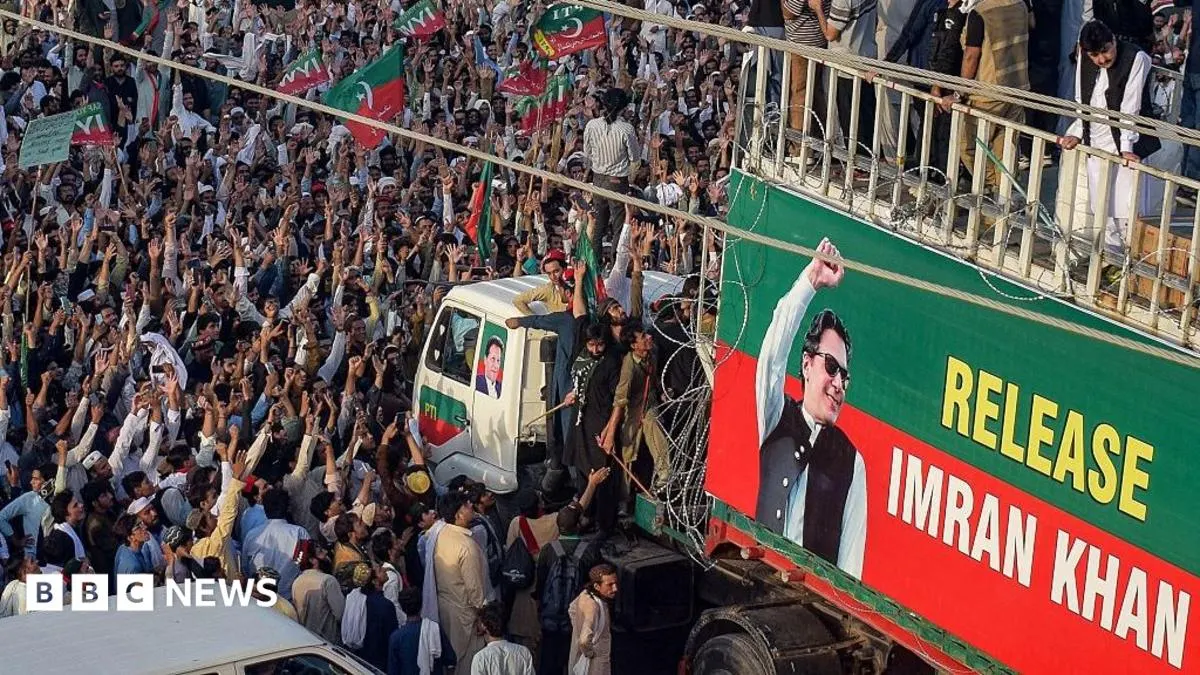
Thousands of supporters of jailed former prime minister Imran Khan are marching towards Islamabad to demand his release, amid growing concern about his health. The protest follows failed talks between Khan’s Pakistan Tehreek-e-Insaf party and the government, and renews political pressure around a figure who remains influential despite imprisonment.
About 5,000 people set off from Lakki Marwat, 275km from the capital, on Sunday; the march paused overnight and was expected to resume on Monday. Khan’s family says he has lost most of the sight in his right eye and wants him examined and treated, while authorities say doctors found him medically fit after a hospital visit in August. Khan, 73, was jailed for 17 years over corruption and faces more than 100 cases, which he says are politically motivated; authorities have blocked key Islamabad routes with shipping containers.
- Thousands are marching towards Islamabad to demand Imran Khan’s release.
- His family says he has lost most of the vision in one eye.
- Talks between his party and the government ended without agreement.
New here? Start with this
Imran Khan is a former prime minister of Pakistan who remains politically influential despite being imprisoned. The 73-year-old was convicted of corruption and sentenced to 17 years in jail; he also faces over 100 additional criminal cases, which he claims are politically motivated. His case has become a major point of division within Pakistani politics.
His family has raised serious concerns about his health, stating that he has lost most of his sight in his right eye and requires medical treatment. The government contests this account, with authorities maintaining that doctors found him in good health following an examination in August. This disagreement over his condition reflects broader tensions surrounding his detention.
Khan's supporters view him as a victim of political persecution and continue to mobilise on his behalf despite his imprisonment. Recent attempts by his political party to negotiate his release through talks with the government have failed. His supporters' continued activism demonstrates his enduring political significance and the polarising nature of his case in Pakistan.
Both sides, in good faith
The strongest fair case each way — we don't pick a winner.
The case for
The strongest case for Khan's supporters centres on concerns about disproportionate and selective prosecution. They argue that the scale of charges—over 100 cases and a 17-year sentence—appears vastly greater than consequences faced by other politicians accused of corruption, suggesting his prosecution reflects political revenge rather than consistent application of law. This view is bolstered by the context that Khan directly challenged Pakistan's military and judicial establishment, and by independent observers' documented concerns about due process irregularities. Khan's supporters contend that imprisoning a still-influential political figure whilst restricting public assembly represents silencing of political opposition, and that dismissing health concerns adds to fears he is not receiving proper care.
The case against
The case for the government's position rests on the principle that public officials must face accountability through legitimate judicial processes regardless of their political challenge to existing power structures. Advocates note that Khan was convicted by courts for specific documented offences; the multiplicity of cases reflects the actual scope of alleged misconduct during his tenure, not necessarily persecution. They argue that controlling mass protests through security measures is reasonable governmental authority, particularly when demonstrations could disrupt public order or represent attempts to overturn lawful convictions. On health matters, authorities maintain that medical examinations have confirmed Khan's fitness, suggesting claims otherwise are being weaponised for political purposes. From this perspective, upholding the rule of law and preventing powerful individuals from evading accountability is essential to democratic governance.