The newest entrant in the military’s launch competition isn’t actually a launch company
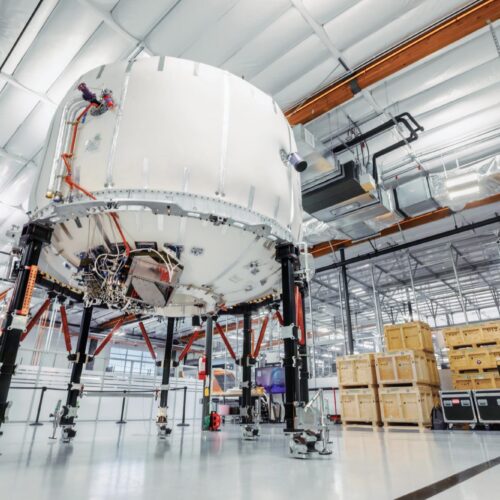
The US Space Force has added two more companies, Impulse Space and Relativity Space, to the pool of firms eligible to bid for national security launch contracts. Winning a place in the military launch market is both a mark of maturity and a valuable revenue source for rocket firms. While Relativity Space's inclusion is unsurprising given progress on its heavy-lift Terran R rocket, the addition of Impulse Space is notable because it is not a launch company at all — it specialises in in-space operations rather than launching from Earth.
The additions fall under "Lane 1" of the National Security Space Launch Phase 3 programme, which covers more risk-tolerant missions and has around 30 launches worth roughly $5.6 billion set aside for newer entrants (Lane 2 is reserved for established players SpaceX and United Launch Alliance). Impulse Space is developing a "kick stage" called Helios, which can deliver up to 9 km/s of delta-V to boost payloads from low-Earth orbit to geostationary orbit around 36,000 km up, effectively giving a medium-lift rocket such as the Falcon 9 the reach of a larger vehicle. Helios is powered by the methane-and-liquid-oxygen "Deneb" engine, which produces 15,000 pounds of thrust; the company is targeting a 2027 debut flight on a Falcon 9, and must demonstrate Helios in flight before it can win task orders, with launches potentially following 18 to 24 months later. Impulse and Relativity join Rocket Lab and Stoke Space, added in March 2025, and original 2024 awardees SpaceX, ULA and Blue Origin.