The Roman telescope has enough gas for 22 years, double NASA’s expectations
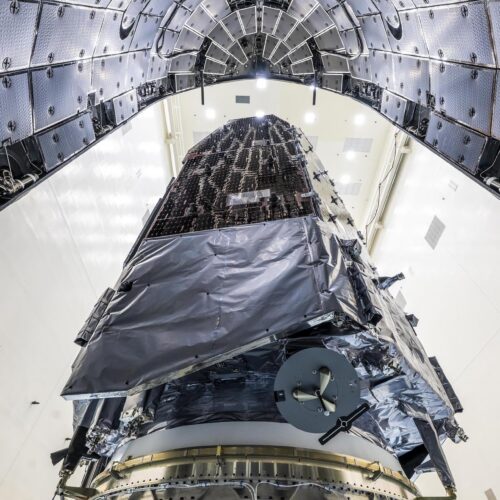
NASA has confirmed that its Nancy Grace Roman Space Telescope has enough fuel to operate for at least 22 years, more than double the mission's original planning target. The $4.3 billion observatory, launched on 30 August aboard a SpaceX Falcon Heavy rocket, benefited from an exceptionally precise launch and a near-flawless first course-correction manoeuvre, leaving far more propellant in reserve than engineers had budgeted for. This mirrors a similar fuel windfall enjoyed by the James Webb Space Telescope after its accurate 2021 launch, and significantly extends the scientific lifespan of a mission designed to map vast swathes of the cosmos and probe the mysterious force known as dark energy.
Roman was originally designed for a minimum five-year mission with a possible five-year extension, but mission planners had deliberately built in conservative fuel estimates. The observatory's first major thruster burn used just 40 pounds of hydrazine, far below the 441 pounds allocated, while its lower-than-expected launch weight allowed ground crews to load extra propellant beforehand. Roman is now heading towards a "quasi-halo" orbit around the Sun-Earth L2 Lagrange point, a journey expected to take about three months, from where its Wide Field Instrument will capture images at Hubble's resolution but across 100 times the area, enabling it to survey in a month what would take Hubble a century.
- Roman telescope's fuel could last 22 years, double original plans
- Precise SpaceX launch and manoeuvre left large propellant reserves
- Telescope heads to L2 orbit to study dark energy and galaxies