Trump and Chinese president Xi end summit without major agreement on AI
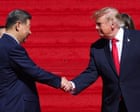
Donald Trump and Chinese president Xi Jinping concluded their three-day Washington summit on Friday without achieving a major breakthrough on artificial intelligence (AI), despite widespread hope that the two leaders would establish frameworks to pause their nations' ongoing AI arms race. The visit emphasised ceremonial pageantry and personal rapport rather than substantive policy agreements, disappointing experts and foreign governments who fear AI technology could pose an existential threat to humanity. With top technology executives present at a White House state dinner, critics argued the summit represented a missed opportunity to establish meaningful cooperation on AI governance.
Trump's main policy announcement was a modest two-month extension of a trade truce, whilst the pair discussed conflicts in Iran and Ukraine and Taiwan's status. Xi acknowledged America and China's shared responsibility to develop and manage AI responsibly and keep development "under human control," whilst China aims to achieve 90% penetration of next-generation smart terminals and AI agents by 2030. However, Trump appeared more interested in rebranding artificial intelligence as "super intelligence" rather than pursuing concrete agreements, and seemed unwilling to establish technical working groups between Chinese and American technology companies and experts. Democratic congressman Ro Khanna described the summit as "such a layup," suggesting Trump could have easily positioned himself as a statesman by simply agreeing to technical working groups, which he believed Xi would have accepted.
- Trump and Xi failed to agree on pausing the AI arms race despite expert hopes
- Summit prioritised ceremonial events over substantive policy breakthroughs
- Trump showed more interest in rebranding AI than establishing cooperation frameworks
AI Americas Art Business Culture Geopolitics Government Politics Technology World