World news and discussion on TalkFuse.
US strikes hit Iran for seventh consecutive night
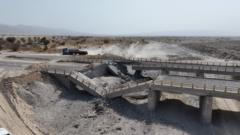
The United States military has entered its seventh consecutive night of bombing operations against Iran following President Trump's declaration that a ceasefire arrangement had ended. The strikes target Iranian military infrastructure and capabilities, according to US Central Command. Both sides have made competing claims about damage and targets hit, with Iran asserting that oil tankers were destroyed in the Strait of Hormuz—a claim the US military rejected—whilst Iranian media reported explosions across multiple cities and provinces including Yazd, Qeshm island, and Bandar Abbas.
The escalating military exchange has severely disrupted shipping through the Strait of Hormuz, a waterway essential for approximately one-fifth of the world's oil and gas supply. Over the past week, Iran has claimed attacks on American military facilities throughout the Gulf region, whilst the US has denied striking civilian targets despite local authorities reporting deaths and independent verification of damage to critical infrastructure. The conflict followed the breakdown of negotiations aimed at a permanent ceasefire, with disagreements over the security situation surrounding the strait preventing diplomatic resolution.
In short
- US military conducted seventh consecutive night of strikes on Iran after Trump declared ceasefire agreement ended, targeting military infrastructure
- Strait of Hormuz shipping—carrying ~20% of world's oil and liquefied gas—has largely stopped due to ongoing military escalation
- Iran and US dispute civilian damage claims; BBC verified infrastructure damage to a bridge whilst US denies targeting non-military facilities
Steelman: both sides, in good faith
The strongest fair case each way — we don't pick a winner.
The case for
The Trump administration's declaration that the ceasefire had ended, combined with Iran's own military actions against US facilities throughout the Gulf region, provides grounds for resumed defensive operations. The United States has legitimate security interests in protecting critical global infrastructure, particularly the Strait of Hormuz through which approximately one-fifth of the world's oil and gas supply passes, and Iran's actions have directly threatened this vital waterway and international commerce. Military operations targeting military infrastructure represent a proportionate response to hostile Iranian activities when diplomatic negotiations have failed to resolve underlying security disagreements.
The case against
Military escalation following the breakdown of ceasefire negotiations risks driving the region further toward uncontrolled conflict and potentially destabilising global energy markets and international shipping. Rather than pursuing renewed military strikes, continued diplomatic efforts offer the only sustainable path to lasting peace, and the cycle of reciprocal attacks—with competing claims about civilian casualties and critical infrastructure damage—increases the danger of accidental escalation toward full-scale war. The humanitarian and economic costs of ongoing military operations, including disruption to global oil and gas supplies affecting innocent populations worldwide, argue for restraint and a renewed commitment to negotiated settlement.
Explained simply
The conflict between the United States and Iran has roots in the 1979 Iranian Revolution and decades of rivalry over regional influence, strategic interests, and military presence in the Middle East. A ceasefire arrangement had been in place to manage this tension, but recent disagreements over security matters have led to its breakdown.
The main point of contention is the Strait of Hormuz, a waterway between Iran and Oman through which approximately one-fifth of the world's oil and gas supply passes each year. The two countries disagree fundamentally on how this strategically vital waterway should be secured and controlled, with negotiations over a permanent arrangement having failed to find common ground.
The Strait of Hormuz's role in global energy trade makes any disruption to it a matter of international concern affecting energy prices and economies worldwide. Nations dependent on energy supplies from the region have interests in maintaining stability and ensuring safe passage through the waterway.