Cosmic dust from meteorites forms Venus’s lower atmospheric haze
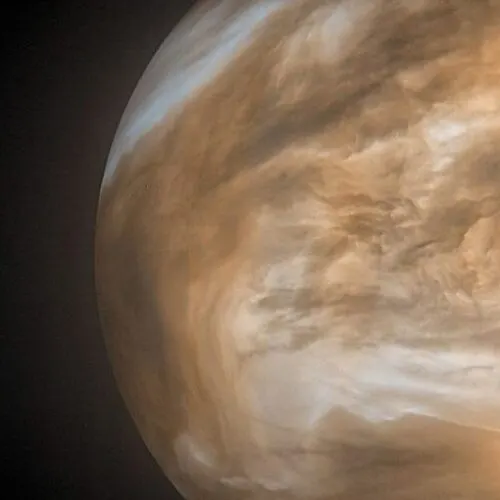
Researchers have used a physical model to explain Venus’s long-mysterious lower atmospheric haze: it forms from cosmic dust left behind as meteorites burn up. The finding helps explain how the haze develops and how it may contribute to cloud formation in Venus’s atmosphere.
A team led by Hiroki Karyu of Tohoku University modelled how sulfuric acid condenses on meteorite particles, which then cluster and sink into the hot lower atmosphere as the acid evaporates. The remaining particles form the haze and may also account for the atmosphere’s unexplained absorption of ultraviolet light. The model rules out volcanic ash and surface dust as the main sources.
- Venus’s lower haze forms around dust from burning meteorites.
- Sulfuric acid condenses on the particles before evaporating in the hot atmosphere.
- The cosmic dust may also explain Venus’s ultraviolet absorption.
New here? Start with this
Venus, Earth's closest planetary neighbour, has a thick atmosphere covered in clouds. Scientists have long puzzled over a mysterious haze layer in Venus's lower atmosphere.
Understanding what creates this haze could solve a mystery about how Venus's atmosphere absorbs certain types of light from the sun. Learning about the haze also helps scientists understand how atmospheres form and change on other planets.
Earlier theories suggested the haze might come from volcanic eruptions or dust blown up from Venus's surface. Hiroki Karyu's team at Tohoku University now proposes a different explanation: that the haze originates from material falling to the planet from space.
Read the full article at the source →
Originally published by Ars Technica as “Venus’ mysterious haze is actually cosmic dust”.