What happens when you put AI to work deciphering lost languages?
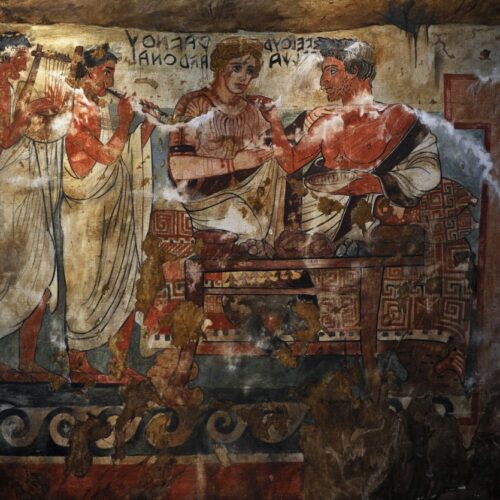
An AI engineer's claimed breakthrough in decoding Linear A, the undeciphered Bronze Age script of Minoan Crete, illustrates both the promise and the limits of using artificial intelligence to tackle ancient languages. Unlike previously deciphered scripts, Linear A and Etruscan lack a "bilingual anchor" such as the Rosetta Stone or a confirmed relative language, making them especially resistant to both traditional scholarship and AI-assisted analysis. The case matters because it highlights how AI is best understood as a research assistant that tests human hypotheses at scale, not a tool that can generate meaning from nothing.
In June 2026, a self-taught AI engineer and amateur linguist began with a single hunch that a word in a Linear A prayer inscription derived from a Semitic root meaning "to dwell." Using AI-built scripts to test this pattern across the known corpus, he assigned values to 40 signs and compiled a 408-word lexicon, concluding the language belongs to the Semitic family. Experts note AI excels at rapid pattern-testing, spotting repeated sequences and restoring damaged inscriptions, and can perform "cross-lingual transfer" between related languages, as demonstrated with Ugaritic. However, without a known language family or bilingual text to validate results, statistical pattern-matching cannot manufacture genuine meaning, leaving the engineer's claims still under review.
- AI engineer claims Linear A breakthrough using Semitic-root hypothesis and pattern testing.
- AI aids decipherment by testing hunches at scale, not generating meaning alone.
- Linear A and Etruscan remain hard due to lack of a bilingual "anchor" text.