Why are Ukraine’s military recruiters facing violence in their own country?
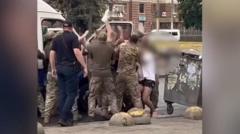
Ukraine is facing growing violent resistance to its military mobilisation efforts as the war with Russia drags into its fifth year, with recruitment officers increasingly targeted by frustrated or fearful citizens. Many men are reluctant to enlist due to fear of the front line and weariness over a conflict with no clear end in sight, and this resistance is now manifesting as physical attacks on the officers tasked with enforcing conscription.
The National Police Service has recorded more than 600 assaults on recruitment officers to date, warning that the aggression has grown "increasingly threatening". In April, several recruiters were stabbed, one of them fatally, while this month in Lviv around 200 protesters surrounded officers attempting to detain a suspected draft dodger, smashing and overturning their vehicle. The Lviv incident drew national attention, prompting President Volodymyr Zelensky to publicly condemn violence against serving soldiers.
- Ukraine struggles to mobilise men as war reaches its fifth year
- Over 600 assaults on recruitment officers recorded, one fatal stabbing
- 200 protesters attacked recruiters in Lviv; Zelensky condemned the violence
Both sides, in good faith
The strongest fair case each way — we don't pick a winner.
The case for
Supporters of firm recruitment enforcement argue that Ukraine is fighting for its survival and that mobilisation, however unwelcome, is a necessary and lawful function of a state under existential threat. They contend that recruiters are simply doing a difficult, essential job, that draft evasion undermines fairness to those already serving and dying at the front, and that assaults on officials performing lawful duties cannot be excused, however unpopular conscription is, since the alternative is an under-resourced army unable to hold the line.
The case against
Critics who are sympathetic to the anger directed at recruiters argue that much of the violence reflects genuine grievances rather than simple lawlessness: widely reported cases of heavy-handed, sometimes abusive or corrupt conduct by draft-office (TCC) personnel, including men being seized off the street or beaten, have eroded public trust. They argue that after years of gruelling war, families exhausted by loss, and a mobilisation system many see as opaque and unevenly applied to the well-connected, resentment toward recruiters is an understandable, if not justifiable, response to a process that feels coercive and unaccountable rather than fair and transparent.