Would you pay $58.5m to live in this iconic New York building?
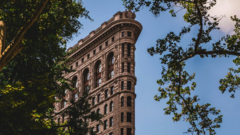
New York's Flatiron Building, one of the city's most recognisable landmarks, is being converted from office space into ultra-luxury apartments, with units priced at up to $58.5m (£43.9m). The nearly century-and-a-quarter-old building had been covered in scaffolding for seven years during a major internal and external renovation, but as the works near completion it is emerging both as a restored architectural icon and as a symbol of just how expensive New York's luxury housing market has become.
Completed in 1902 and designed by architect Daniel Burnham, the steel-framed skyscraper was originally nicknamed "Burnham's Folly" over fears its thin, wedge-shaped form would topple. It served as offices for over a century, most recently housing publisher Macmillan until 2019, before sitting vacant amid ownership disputes; current owners the Brodsky Organization, GFP Real Estate and the Sorgente Group began the conversion in 2023. The finished building will hold 36 open-plan condos ranging from $11m (£8.3m) three-bedroom units to the $58.5m five-bedroom penthouse, already under contract, while local businesses say tourist footfall is returning as the scaffolding comes down.
- Flatiron Building being converted into luxury flats, top unit $58.5m
- Iconic 1902 skyscraper was office-only for over a century
- Seven years of scaffolding coming down as renovation nears completion
Both sides, in good faith
The strongest fair case each way — we don't pick a winner.
The case for
Supporters see the Flatiron's transformation as a triumph of preservation and adaptive reuse: a fragile, century-old steel-framed icon that stood empty and at risk of decay has been painstakingly restored rather than demolished or left to rot. They argue that private capital willing to pay top dollar is precisely what funds the meticulous, expensive work needed to save landmark buildings, and that turning underused office space into homes also helps address a broader shortage of housing stock in a supply-constrained city. For this view, the eye-watering price tag simply reflects genuine scarcity value, exceptional craftsmanship and the building's unmatched historic and architectural significance, not a moral failing.
The case against
Critics argue that converting one of New York's most publicly cherished landmarks into a handful of ultra-luxury condominiums, with a penthouse at $58.5m, turns a shared civic symbol into an exclusive private asset accessible to almost no one. They see it as emblematic of a housing market so distorted that historic buildings are treated primarily as vehicles for extreme wealth rather than as places serving a broad cross-section of residents or the public life of the city. For those holding this view, the concern is less about the renovation itself than about what it represents: diminishing public and civic use of iconic spaces in favour of a small number of ultra-wealthy buyers, at a time when ordinary New Yorkers face an acute affordability crisis.