Xreal opens Aura smartglasses pre-orders from $1,279
Developing story first seen 1 hour ago
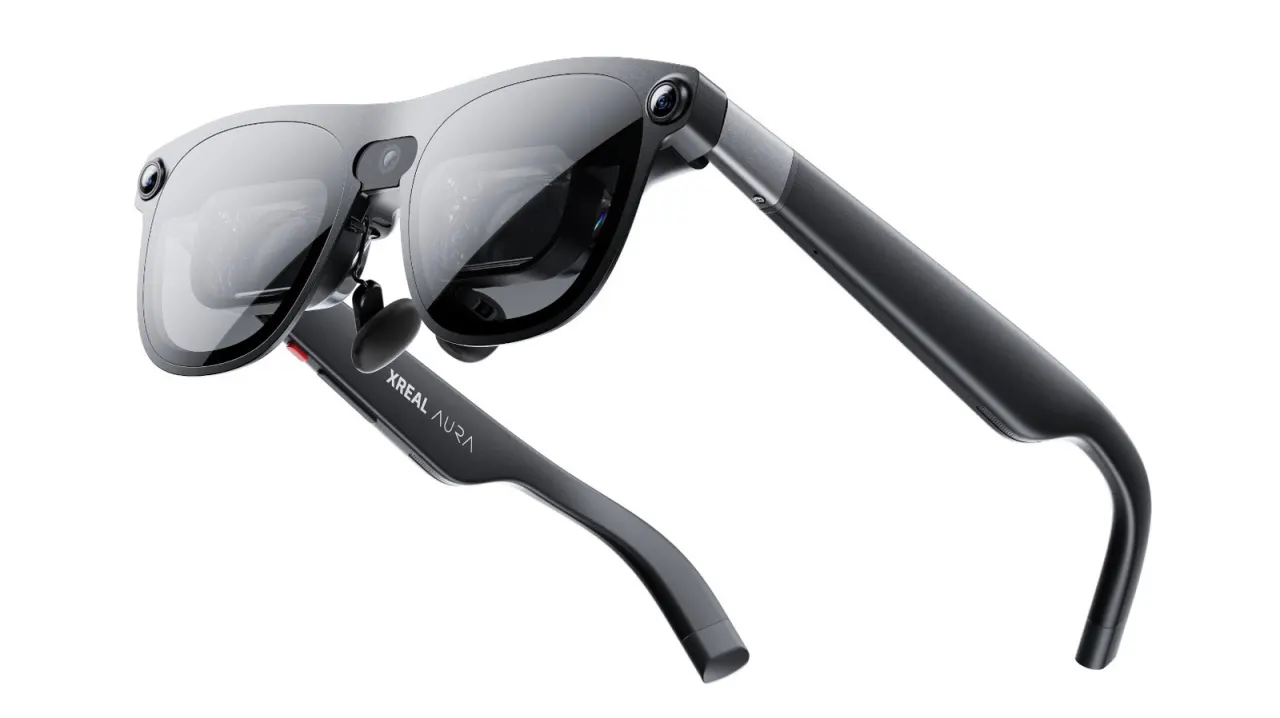
Xreal has opened pre-orders for its Aura smartglasses, an Android XR device starting at $1,279. The launch matters because Aura combines augmented and mixed reality features with a lighter design, though it relies on a separate computing puck connected by a cable.
The glasses weigh less than 95 grams and have see-through lenses, a 70-degree field of view, camera-based hand tracking and Bose-engineered audio. The puck runs Android XR, includes Google Play and Gemini, and has a trackpad and fingerprint sensor; the glasses can also connect to a computer as an external monitor. A higher-spec model with 16GB of RAM and 512GB of storage costs $1,499, compared with 12GB and 256GB in the base version. Shipping is planned soon in the US, Canada, Japan and South Korea, with more markets expected in 2027.
- Xreal Aura pre-orders start at $1,279.
- The glasses connect to a separate Android XR puck.
- A 16GB RAM model costs $1,499.
New here? Start with this
Smartglasses are wearable devices that display digital information directly in your field of view, layering it over what you see of the physical world. Instead of looking down at a phone screen, you see information appearing in your line of sight, keeping you aware of your surroundings whilst accessing digital services.
Several major technology companies, including Apple and Meta, are developing their own smartglasses as they believe these devices could eventually replace smartphones as the primary way people access digital information and services. The market is still very new, with most devices remaining expensive and aimed at early adopters rather than mainstream consumers.
Xreal is a Chinese company that has been developing and selling smartglasses-type devices for several years. The company's approach differs from competitors by using a lightweight glasses unit paired with a separate computing device, rather than trying to pack all the technology into the spectacles themselves.
Full account
Xreal has commenced pre-orders for its Aura smartglasses, the Android XR-enabled wearable introduced at Google's developer conference earlier this year. The device is now available to customers holding existing reservation deposits, with pricing starting at £1,002 for the baseline configuration.
The Aura maintains a sub-95-gram weight through a tethered architecture in which processing power and battery capacity reside within a separate compute puck rather than the glasses themselves. This design keeps the wearable lightweight and compact whilst incorporating transparent see-through lenses offering a 70-degree field of view, enabling simultaneous perception of physical surroundings and digital overlays. Visuals remain sharp and bright even in direct sunlight. Bose-engineered audio technologies integrate into the frame, and the system runs on Qualcomm's Snapdragon Reality Elite chip alongside Android XR, Google Play and Gemini AI functionality.
Interaction occurs through hand-tracking detected by integrated cameras, generating virtual pointer functions and gesture-based control. The compute puck includes a touchpad and fingerprint sensor for navigation and can be worn via lanyard or attached to clothing. Two sizes—medium and large—serve different users, with two storage configurations offering either 12GB RAM and 256GB storage (£1,002) or 16GB RAM and 512GB storage (£1,184). The glasses function as an external display when connected to computers via USB-C. Initially, only reservation holders may pre-order, limited to 2,000 Founder's Edition units shipping within the current year. General pre-orders commence subsequently, with rollout beginning in the United States, Canada, Japan and South Korea, and wider market availability planned for 2027.
The Aura enters a competitive market shaped by emerging lightweight mixed-reality alternatives, particularly Meta's VR Glasses launching spring 2027. Both systems employ tethered compute modules and comparable weight profiles, yet diverge significantly in technical approach. Xreal's transparent lenses permit direct environmental visibility, whilst Meta's passthrough technology delivers fully immersive digital representations of the physical world. Interaction methods differ similarly: the Aura employs hand-tracking with an integrated touchpad, contrasting with Meta's eye-tracking system that detects finger-pinching gestures. These architectural differences create markedly different user experiences despite comparable form factors.
Where outlets differ
Source 1 emphasises technical specifications and product features; Source 2 prioritises competitive positioning against Meta's VR Glasses
Source 2 extensively details availability constraints (2,000 Founder's Edition units, pre-orders limited to existing reservations); Source 1 focuses on future geographic expansion without mentioning supply limitations
Source 1 includes Bose audio engineering and dual sizing options; Source 2 omits these technical details
Source 2 provides comprehensive comparative analysis of transparent versus passthrough approaches and interaction methodologies; Source 1 presents standalone specifications
Weight reported as 'under 95 grams' in Source 1 versus 'around 100 grams' in Source 2, suggesting different total system measurements
More coverage
Art Culture Gadgets Technology
Read the full article at the source →
Originally published by Engadget as “Xreal’s Aura Android XR smartglasses will cost you at least $1,279”.