Former Chinese premier Zhu Rongji dies aged 97
Developed over time first seen 2 months ago
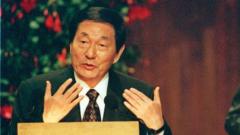
Former Chinese Premier Zhu Rongji has died aged 97. Premier from 1998 to 2003, he was a leading architect of China’s economic transformation, helping secure World Trade Organization membership and open the country’s factories to global trade and foreign investment. His policies helped establish China as a major manufacturing power, though their social costs remain part of his legacy.
Zhu centralised tax powers, restructured or closed failing state companies and promoted home ownership, while building a reputation for blunt criticism of corruption. The reforms supported double-digit growth but contributed to roughly 30 million lay-offs over five years and greater inequality. Purged twice under Mao Zedong, he returned to senior government after Mao’s death and became vice-premier in 1991 before taking office as premier.
- Zhu Rongji, a key Chinese economic reformer, has died aged 97.
- He helped open China to global trade and investment.
- His reforms boosted growth but brought lay-offs and inequality.
New here? Start with this
Zhu Rongji was one of China’s most influential economic leaders during the country’s shift from a largely state-run system towards greater trade with the rest of the world. He served as premier, the head of China’s government administration, from 1998 to 2003, working under President Jiang Zemin.
China’s ruling Communist Party kept political control while allowing more market-based activity, foreign investment and exports. Zhu played a major role in reforms to state-owned businesses, taxation and housing, and in China joining the World Trade Organization, which sets rules for international trade.
These changes helped China become a major manufacturing and exporting economy, but they also brought disruption. Many workers lost jobs as unprofitable state firms were closed or reorganised, and the gap between richer and poorer parts of society grew.
Both sides, in good faith
The strongest fair case each way — we don't pick a winner.
The case for
Supporters argue that Zhu Rongji’s reforms were essential to modernising an inefficient economy and giving China the capacity to raise living standards on an unprecedented scale. They credit his fiscal centralisation, state-sector restructuring and support for global trade with creating a more productive, competitive economy, while valuing his willingness to confront corruption and institutional weakness. From this view, difficult short-term disruption was an unavoidable part of replacing failing systems with ones capable of sustaining long-term growth.
The case against
Critics argue that the reforms’ human costs were too readily treated as secondary to growth, particularly for the millions of workers made redundant as state firms were restructured. They contend that closer integration with global markets and market-oriented policies concentrated gains unevenly, widened inequality and weakened the security once provided by state employment. From this perspective, economic modernisation should have been accompanied by stronger protections for displaced workers and a more equitable distribution of its benefits.
More coverage
Read the full article at the source →
Originally published by BBC World as “Zhu Rongji, who helped turn China into a trading giant, dies at 97”.