New EU border system tripling time at passport control, airport boss says
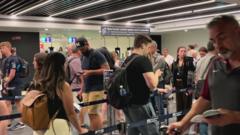
Europe's new Entry Exit System, which collects fingerprints and facial images from non-EU visitors entering the Schengen region, has generated substantial delays at airport borders since its October rollout. At Rome's Fiumicino Airport, processing times for British passengers have increased from seven to twenty minutes, whilst travellers across multiple airports report actual waits exceeding one to two hours. The system requires registration through automated kiosks or with border officers upon arrival, with verification occurring again during departure.
The European Commission maintains that disruption remains limited at most airports, yet airport operators and airlines describe serious implementation challenges. Rome's aviation chief stated that recent technical integration improvements have helped, but acknowledged current service remains below pre-system standards and requires urgent attention. Airlines have cautioned summer travellers about extended delays, whilst border officials attribute queuing problems to equipment failures and processing bottlenecks.
- New EU Entry Exit System has tripled border wait times at affected airports, increasing processing from 7 to 20 minutes with reported 1-2 hour queues in practice
- Airport authorities cite system complexity and technical failures; EU Commission claims disruption is limited to most locations
- Airlines advise summer passengers to prepare for extended delays; airport officials say urgent fixes are needed
New here? Start with this
Europe's Entry Exit System, introduced in October, is a new border control process for people entering the Schengen area from outside the EU, including British travellers. It records fingerprints and a facial image, either at self-service kiosks or with a border officer, and checks are repeated when leaving. The system replaces the old manual passport stamp with this digital registration step.
Airports across Europe have reported that processing takes noticeably longer than before, with some travellers facing waits well beyond the norm. Rome's Fiumicino Airport is one example cited, where officials overseeing the airport have spoken publicly about the impact on passengers. Airlines and airport operators have been flagging the issue, while the European Commission, which oversees EU-wide policy, says problems are not widespread.
The story matters because it affects anyone travelling from Britain or other non-EU countries to popular European destinations, particularly during busy summer travel periods. It also raises broader questions about how a major change to Europe's border technology is being managed and whether airports have the capacity to cope with it.
Both sides, in good faith
The strongest fair case each way — we don't pick a winner.
The case for
Supporters of the Entry Exit System argue that robust biometric checks are a necessary modernisation of Schengen's external border, replacing manual passport stamping with a more reliable record of who has entered and overstayed, which strengthens security and immigration enforcement across the bloc. They contend that teething problems are an expected part of rolling out complex technology at such scale, and that early delays should ease as kiosks, staffing and integration improve, as Fiumicino's own experience of gradual gains already suggests. From this view, short-term inconvenience is a reasonable price for a system that ultimately benefits both security services and legitimate travellers through faster, more consistent processing once bedded in.
The case against
Critics, including airport operators and airlines, argue that the rollout has been poorly managed, with waits stretching to one or two hours that go well beyond the inconvenience officials originally promised and that risk serious harm to tourism, missed connections and airport operations during peak summer travel. They point out that equipment failures and processing bottlenecks are not abstract growing pains but concrete failures of planning and resourcing that fell on travellers and frontline staff, and that the European Commission's assurances of limited disruption sit uneasily with reports from the ground. For them, the priority should be fixing implementation urgently and honestly, rather than treating prolonged queues as an acceptable cost of a security upgrade that was meant to be introduced smoothly.