World news and discussion on TalkFuse.
Ferry carrying 116 passengers sinks off Guyana coast, authorities say
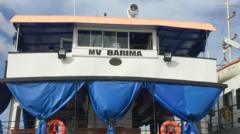
A ferry carrying 116 passengers has sunk off the coast of Guyana, with 53 people rescued so far, according to local authorities. The MV Barima capsized near Iron Punt while travelling its usual route from Georgetown to Port Kaituma, prompting an urgent overnight search operation involving state and private boats.
A distress call was received at 23:01 local time, and Public Works Minister Juan Edghill said the vessel, built in 1939 and 40m long, was equipped with 250 life jackets, two rigid life rafts and six inflatable life rafts. It remains unclear how the search operation is progressing or whether authorities expect to rescue the remaining passengers, with Prime Minister Mark Phillips reportedly leading the government's response.
In short
- Ferry MV Barima sank off Guyana with 116 passengers aboard
- 53 rescued so far; fate of others unclear
- PM Mark Phillips leading overnight search and rescue effort
Explained simply
Guyana is a country on South America's north coast where ferry services are vital for connecting communities across its waterways. Many residents depend on these boats for work, school and trade, particularly in regions where roads are limited. The MV Barima operated one of these crucial routes, regularly ferrying passengers between Georgetown, the capital, and Port Kaituma.
When major emergencies occur in Guyana, the government responds through its various ministries. Prime Minister Mark Phillips leads the overall response, whilst the Ministry of Public Works, headed by Minister Juan Edghill, coordinates specific aspects of such incidents. These are the country's formal structures for managing large-scale crises.
A ferry carrying over a hundred passengers is a serious matter in any country, but particularly where communities rely on water transport as essential infrastructure. In Guyana, where many settlements are scattered and alternative transport options are limited, ferries are integral to daily economic and social life. Incidents affecting these services therefore have wider implications for the regions they serve.