Video games news, releases, esports and culture — all the biggest gaming stories in one place.
Halo Formula One and Ninja Warrior are taking the community by storm
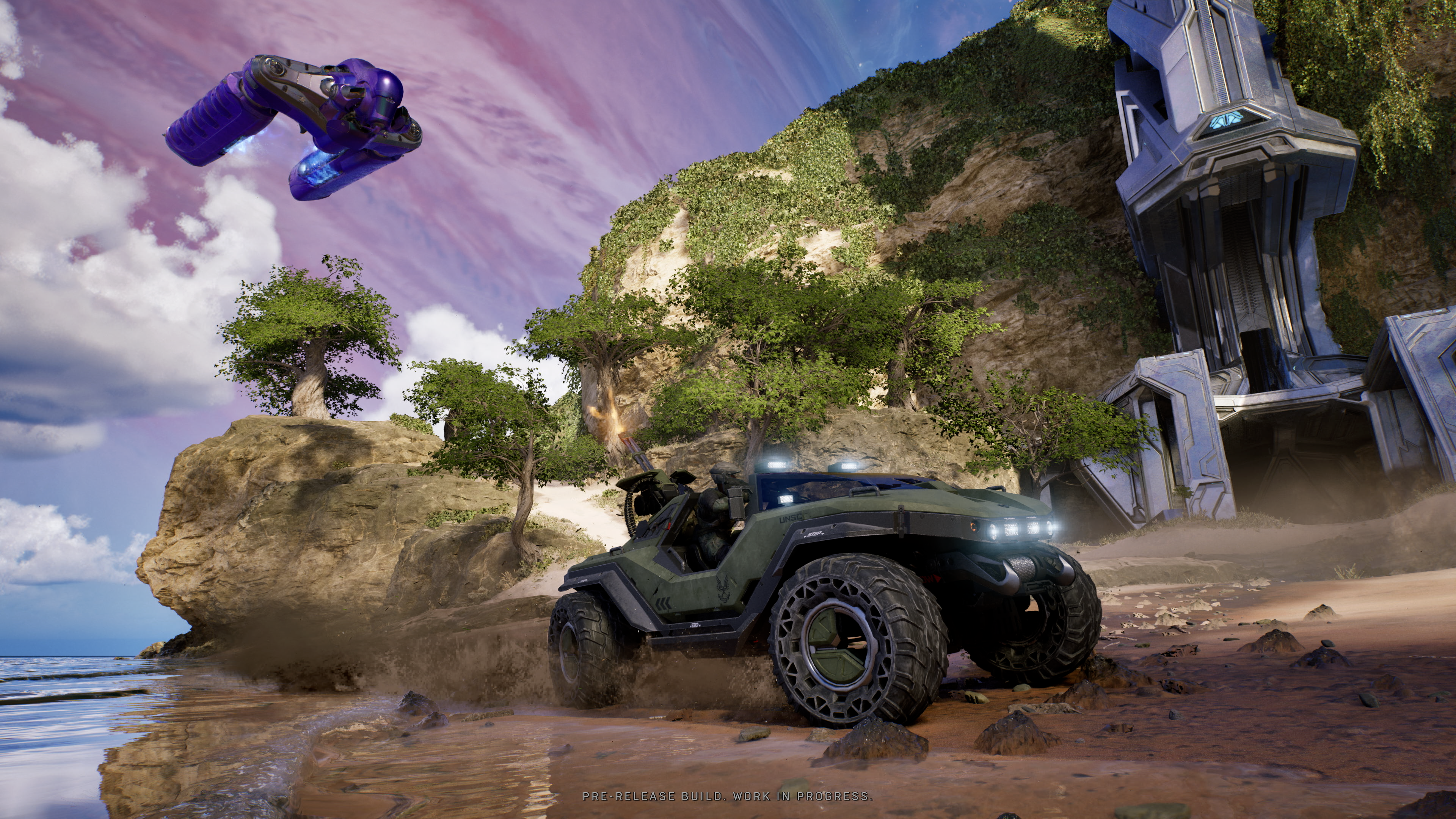
Halo's Forge creation tool, long known for user-generated maps and modes, has quietly spawned two thriving community subcultures: a Formula One-style racing league and an obstacle-course competition modelled on Ninja Warrior. The racing league, run under the HaloTracks governing body via the "haloformula" Instagram account, recreates real-world circuits such as Monaco within Halo, with competitors racing Mongoose vehicles. It highlights how a decades-old console tool continues to generate niche but dedicated fan-run competitive scenes that rarely break into wider view.
The Formula M league traces its roots back 16 years to a Halo 3-era format called HT Le Mans, which used multiple vehicle classes on rough, unprepared terrain before evolving into dedicated racing-circuit builds with Halo Reach's improved Forge mode. Over its last two seasons it has featured 35 drivers, and its Discord community has grown fourfold in six months, from roughly 300 to 1,200 members. Organisers say Halo's vehicle physics are deceptively complex, and a custom game type adds fuel depletion, track limits, pit-lane speed limits and drafting to mimic real Formula One. Separately, Halo Ninja Warrior, created single-handedly by Samuel Burns ("Smokey Massacre"), has built an audience of over 26,000 Instagram followers and nearly 3,000 YouTube subscribers.
In short
- Halo's Forge mode has spawned an unofficial Formula One-style racing league.
- HT Formula M has 35 drivers and a 1,200-member Discord community.
- Halo Ninja Warrior, built by one fan, has 26,000+ Instagram followers.
Explained simply
Halo is a video game series that includes a creation tool called Forge, allowing players to build their own custom maps and game modes. Within this system, community members have established two distinct competitive scenes: a racing league using vehicles on tracks that replicate real Formula One circuits, and an obstacle-course competition modelled on the television programme Ninja Warrior.
The racing league's roots stretch back more than a decade, evolving across multiple Halo releases as the Forge tool capabilities improved. Both competitions operate with their own governance structures, rules systems and competitive rankings, functioning as fully-fledged competitive scenes. These communities remain largely invisible to casual players, yet maintain active participant bases and continue to attract new competitors.
These examples illustrate how video game creation tools can sustain complex competitive subcultures for years without mainstream attention or support. They demonstrate that motivated communities can establish elaborate organisational structures around games entirely on their own initiative, building competitive ecosystems with the sophistication of established esports.