News, events and chat from Sheffield and South Yorkshire.
‘Failures’ led to £65m police budget hole – experts
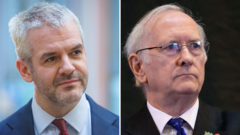
An investigation into a £65m budget hole at South Yorkshire Police has found "misjudgements, weaknesses and failures" in key accounting policies, though no evidence of fraud. The probe was launched by South Yorkshire Mayor Oliver Coppard in 2024 after he took over police and crime commissioner responsibilities, and his finance officers identified accounting omissions that had gone undetected for years. Former Police and Crime Commissioner Dr Alan Billings has disputed the findings, calling for the report to be withdrawn and arguing it reflects a "difference of professional judgement" rather than genuine errors.
The report, produced by the Chartered Institute of Public Finance and Accountancy, found that between 2018/19 and 2023/24 the force arranged financing of around £65m in capital investment through borrowing without applying corresponding charges in its budgeting, overstating reserves and contributing to a projected £49.5m shortfall. While the investigation was under way, the government allowed the force to draw up to £17m from long-term reserves to cover the gap. Billings said his officers had chosen to fund the £65m from existing funds rather than external borrowing to save on interest, with auditors signing off the accounts each year, and said the matter had unfairly hung over him for nearly two years. Coppard defended the investigation, saying it had exposed the problem and enabled the force to move forward with a balanced budget.
In short
- Probe finds £65m South Yorkshire Police budget hole caused by accounting failures
- No fraud found; force borrowed £17m from reserves to cover gap
- Former commissioner Alan Billings disputes findings, calls for report's withdrawal
Steelman: both sides, in good faith
The strongest fair case each way — we don't pick a winner.
The case for
The investigation exposed genuine accounting failures where the force failed to properly account for £65m in capital financing arrangements over multiple years, overstating reserves and contributing to an undetected £49.5m shortfall. These omissions persisted through years of regular audits and required independent inquiry by CIPFA to identify. Exposing these failures is essential for establishing proper financial controls and ensuring genuine accountability, allowing the force to move forward with accurate budgeting.
The case against
Dr Billings argues this represents a difference of professional judgement rather than genuine failures, since his officers deliberately chose to fund the capital investment from existing reserves rather than external borrowing specifically to minimise interest costs—a fiscally prudent strategy. The accounts received annual sign-off from auditors each year, suggesting the approach was not improper, yet the investigation has characterised this as failures and hung unfairly over him for two years despite finding no fraud or misconduct.
Explained simply
South Yorkshire Police has been found to have a £65m budget hole linked to accounting errors and weaknesses spanning several years. An investigation by a public finance body identified "misjudgements, weaknesses and failures" in how the force's money was managed, although no fraud was discovered.
The problem centres on how the force financed around £65m in capital investment between 2018 and 2024. Rather than borrowing from external lenders, the force instead drew on its own reserves to fund this investment, but did not properly account for this in its budgets, which meant the force appeared to have more money available than it actually did.
The investigation was launched by South Yorkshire Mayor Oliver Coppard after he took on oversight of the police force in 2024. The former Police and Crime Commissioner, Dr Alan Billings, disputes the findings, arguing that the force's choice to use reserves rather than external borrowing was a valid decision taken to save money on interest, and that auditors signed off the accounts each year. The government has allowed the force to use £17m from long-term reserves to cover the shortfall whilst it rebalances its finances.