World news and discussion on TalkFuse.
Canadian wildfires rage as Trump warns Carney again over ‘poisoning’ US air
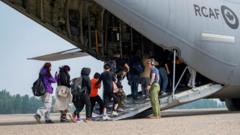
US President Donald Trump has again warned Canadian Prime Minister Mark Carney over wildfire smoke drifting into the United States, telling him during Sunday's World Cup Final to bring the fires under control and suggesting Canada "should pay some damages" for the impact. The remarks escalate tension between the two countries after Trump threatened new tariffs on Canada last week over what he called the "incalculable" cost of smoke that shrouded Washington DC and New York. Ontario Premier Doug Ford hit back, saying Trump should support "his closest allies and friends" rather than "threaten tariffs", pointing out Canada had previously assisted the US during Hurricane Helene and Californian wildfires.
More than 900 wildfires are currently burning across Canada, having razed roughly 28,000 sq km of land and forced widespread evacuations. In Ontario, around 1,800 people have been displaced, including residents of Whitewater Lake First Nation, where homes and infrastructure were destroyed over the weekend. In British Columbia, some 9,000 people in Kimberley are under an evacuation alert. Carney said more than 5,000 firefighters and nearly 300 aircraft, including waterbombers and helicopters, have been mobilised to tackle the blazes.
In short
- Trump pressed Carney to control wildfires, hinted Canada should "pay damages"
- Over 900 fires have burned 28,000 sq km, forcing mass evacuations
- Ontario's Doug Ford accused Trump of threatening tariffs instead of helping
Steelman: both sides, in good faith
The strongest fair case each way — we don't pick a winner.
The case for
The case for holding Canada financially responsible rests on the principle that entities causing measurable harm should bear the costs thereof. Wildfire smoke creates genuine economic and health impacts for American citizens through medical expenses, business disruption, and reduced quality of life. Whilst wildfires are natural phenomena, Canada's forest management practices and resources can influence their severity and spread; if inadequate preparation or management contributes to cross-border pollution, fairness suggests Canada should bear responsibility for preventable damages, particularly given the US has historically aided Canada during comparable disasters without seeking compensation.
The case against
Wildfires are natural disasters fundamentally beyond any nation's control, regardless of resources deployed to fight them. Demanding financial compensation from an ally for atmospheric phenomena crossing borders sets a dangerous precedent—the US itself experiences fires whose smoke reaches Canada, yet neither nation has sought damages. Historical alliance practice shows mutual support during natural disasters, not financial claims; Canada has mobilised extraordinary resources with over 5,000 firefighters and 300 aircraft in genuine effort to extinguish the fires. Responding with tariff threats undermines the alliance relationship that enables such cooperation and shared resilience during future natural disasters.
Explained simply
Canada is dealing with an extensive wildfire crisis that is affecting the United States. Hundreds of major fires are burning across Canadian territory, and smoke from these blazes has drifted south and affected air quality in major American cities. The situation has strained diplomatic relations between the two neighbours.
US President Donald Trump has criticised Canadian Prime Minister Mark Carney over the fires, suggesting Canada should compensate the United States for the impact and threatening new tariffs. Canadian leaders, including Ontario Premier Doug Ford, have pushed back, arguing that Canada has historically helped the US during natural disasters and deserves support rather than threats from its closest ally.
The wildfires represent a significant humanitarian and environmental challenge for Canada. Over 900 fires are currently active, destroying vast areas of land and displacing thousands of people from their homes. The fires highlight how environmental events in one country can affect neighbouring nations and create diplomatic friction when one side seeks compensation.
Americas Government Politics Science World