Culture news and discussion on TalkFuse.
Inside the mine that now grows pak choi
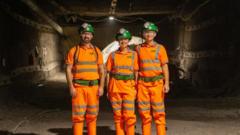
The world's deepest vertical farm has launched inside Boulby Underground Laboratory, a working polyhalite and salt mine near Whitby in North Yorkshire, in a bid to grow food sustainably without the high energy costs usually associated with indoor farming. Led by the University of Sheffield in partnership with food producer Farm Urban, the pioneering research project could pave the way for thousands of disused mines worldwide to be repurposed for affordable food production, potentially creating jobs and boosting fresh produce access in often economically deprived mining communities.
The farm sits around 0.7 miles (1.1km) underground, where crops such as lettuce and pak choi are grown hydroponically in upright light beds, taking advantage of the mine's existing consistent temperatures, lighting and ventilation to cut energy demands. Project co-lead Jacob Nickles said harvesting was already under way, with future trials set to explore salt-tolerant crops like samphire, sea fennel and quinoa, though root vegetables such as carrots and potatoes are unsuitable for the hydroponic system. The year-long study, described by laboratory director Prof Sean Paling as a natural extension of the site's existing dark matter and neutrino research, aims to provide the first real-world evidence of whether underground farming could become commercially viable.
In short
- World's deepest vertical farm launched in a North Yorkshire mine
- Grows lettuce and pak choi 0.7 miles underground using hydroponics
- Could show thousands of disused mines might grow food affordably
Explained simply
Vertical farming grows food indoors in stacked layers, using artificial light and controlled conditions instead of soil. Traditional indoor farms consume large amounts of electricity, making them expensive to operate and limiting how much fresh produce they can grow affordably, particularly in areas far from established food sources.
The University of Sheffield and Farm Urban have launched an experiment in Boulby Underground Laboratory, a working salt and polyhalite mine near Whitby in North Yorkshire. They are growing vegetables in nutrient-rich water rather than soil at around 1.1 kilometres underground, where natural conditions such as consistent temperature and existing ventilation reduce the energy typically needed for indoor farming.
If the project proves successful, thousands of disused mines worldwide could be converted into farms, potentially creating jobs and improving access to fresh produce in former mining communities that often face economic challenges. The year-long study will test whether underground farming can become commercially viable and help address both food security and economic regeneration in mining regions.