Technology news and discussion on TalkFuse.
Man of his word: Pope Leo speeches declared human-authored by Australian AI detection tool
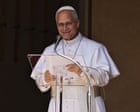
A collection of speeches and writings by Pope Leo XIV, titled Maps of Hope, has been certified as human-authored by the Australian firm Proudly Human, less than two months after the pontiff himself warned that artificial intelligence posed the greatest threat to humanity. The certification, carried out with the Australian Catholic University and Vatican cardinals, matters because it demonstrates a private, voluntary way of verifying authorship in the absence of government regulation, and because Leo's own encyclical had cautioned against AI dominating human affairs and concentrating power in a few hands.
Proudly Human is led by Dr Alan Finkel, Australia's former chief scientist, whose process requires authors or representatives to undergo an ID check and sign a declaration confirming AI was not used to draft the work, before a suite of four or five AI-detection tools cross-checks the text; Maps of Hope was certified as "basically purely human" within a day. Finkel argued that readers, particularly of religious material, have a right to know whether writing reflects genuine human wisdom, while Australian Catholic University's Prof Zlato Skrbis said such certification offers reassurance amid a flood of rapidly generated online content.
In short
- Pope Leo's book Maps of Hope certified as human-written, not AI-generated.
- Certification done by Australian firm Proudly Human, led by Alan Finkel.
- Comes after Leo's encyclical warned AI risks dominating humanity.
Steelman: both sides, in good faith
The strongest fair case each way — we don't pick a winner.
The case for
This approach addresses a genuine need for transparency when AI-generated content proliferates, particularly for authoritative texts like papal writings. By combining identity verification with author declaration and multiple detection tools, Proudly Human provides a transparent, scalable alternative to government regulation that respects voluntary industry standards. The Pope's own warning about AI actually strengthens the case for such certification—his credibility depends on readers knowing his words are genuinely his, and the transparency serves the public interest.
The case against
The effort is paradoxical: using AI detection tools to verify the Pope's warning against trusting AI is logically circular and risks being performative rather than substantive. Current AI detection methods have documented reliability limitations, whilst the process's heavy reliance on author self-declaration means it is not truly independent verification but rather commercial validation of a signature. This creates an illusion of certainty rather than genuine assurance, and the certification company's commercial interests raise questions about whether this is legitimate verification or sophisticated marketing.
Explained simply
Pope Leo XIV issued an encyclical warning that artificial intelligence posed the greatest threat to humanity, cautioning against AI dominating human affairs and concentrating power among a small number of companies. There is a related concern emerging alongside these warnings: as AI software becomes capable of generating text, readers increasingly struggle to know whether content was written by a human or produced by a machine. Verifying authorship has become an important question for audiences online.
In response, a private Australian company called Proudly Human has developed a certification process to verify that texts are genuinely human-authored. The process requires authors to undergo identity verification and declare they did not use AI, whilst multiple AI-detection tools analyse the text. This represents a voluntary approach to verifying authenticity without waiting for government regulation.
Pope Leo's speeches and writings have been certified as human-authored through this process. This matters because it tests whether such private-sector certification can reassure readers during an era when AI-generated content is proliferating online, and because it demonstrates an alternative to official regulation for establishing whether digital content is genuinely human-created.
AI Business Companies Software Technology