Business news and discussion on TalkFuse.
Jagex wants classic British point-and-click MMO RuneScape to be bigger than World of Warcraft
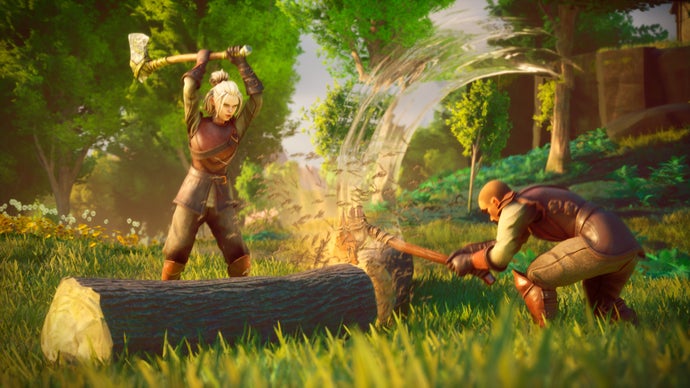
Jagex CEO Jon Bellamy has set out an ambitious five-year goal to make RuneScape the world's biggest MMO franchise, overtaking World of Warcraft's long-held top spot. Speaking to The Game Business, Bellamy acknowledged the significant gap between Jagex and the current market leader but expressed confidence the company could close it, framing the ambition as pragmatic rather than merely aspirational. The comments underline Jagex's continued investment in its RuneScape universe more than 25 years after the original game's launch.
Bellamy's plan hinges on growing three titles simultaneously: Old School RuneScape, RuneScape, and the newer survival-crafting spin-off RuneScape: Dragonwilds, which is due to leave Early Access in September, together reaching a "multi-million person" combined audience. He dismissed concerns that the games might cannibalise each other's players, comparing it to not minding whether customers prefer strawberry or chocolate ice cream. He also cited strong engagement figures, noting Old School RuneScape players average nearly five hours a day, with an average player age of 32.
In short
- Jagex CEO wants RuneScape to overtake World of Warcraft within five years
- Strategy relies on growing three RuneScape titles to a combined multi-million audience
- Dragonwilds exits Early Access in September; OSRS players average nearly 5 hours daily
Steelman: both sides, in good faith
The strongest fair case each way — we don't pick a winner.
The case for
RuneScape boasts demonstrable competitive advantages: an exceptionally engaged, mature playerbase with remarkable daily engagement metrics (nearly five hours for Old School RuneScape), proven design appeal across 25 years, and Jagex's established expertise in live service management. The strategy of developing three distinct games need not cannibalise overall growth if executed with the technical skill Jagex has shown; a distributed playerbase across different titles still represents a cohesive franchise. Organic growth driven by word-of-mouth within such a committed community, paired with the company's financial independence and player trust, provides a realistic foundation for market expansion.
The case against
World of Warcraft's dominance stems not merely from player preference but from Blizzard's substantially greater resources, global marketing infrastructure, and decades of accumulated ecosystem investment that cannot be quickly replicated. Displacing an entrenched market leader in a maturing industry is historically rare and extraordinarily difficult; five years represents an exceptionally ambitious timeline for the scale of growth required. Simultaneously developing three separate games inherently fragments both development resources and player community focus, presenting a strategic vulnerability against a unified, well-resourced competitor able to concentrate its full attention where Jagex must divide it.
Explained simply
RuneScape is a point-and-click massively multiplayer online game that has sustained a dedicated player base for over two decades since its original launch. The game is developed and published by Jagex, a British video game studio, and continues to receive regular updates and content additions. The studio currently operates multiple versions of RuneScape, each designed to appeal to different groups of players.
World of Warcraft, released by Blizzard Entertainment in 2004, is the world's most successful MMO franchise and remains the market leader. The game has generated billions in revenue since launch and established itself as the industry standard for MMOs. Achieving and maintaining such dominance requires substantial ongoing investment, constant content updates, and a large, engaged player community.
The MMO market remains highly competitive, with various studios investing heavily in their titles to compete for players and revenue. RuneScape's survival and continued evolution over several decades makes it a notable example of longevity in an industry where many titles fail to sustain long-term popularity. Given the commercial significance of the MMO sector, developments involving established major franchises attract attention from industry observers and gaming enthusiasts.