Business news and discussion on TalkFuse.
Houthis threaten to attack shipping tankers if they use Saudi Arabian ports on Red Sea
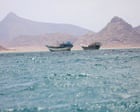
Yemen's Iran-aligned Houthi movement has warned shipping companies that tankers using Saudi Arabian ports risk being attacked, moving quickly to enforce a naval blockade it announced a day earlier. The threat, coming alongside Iran's separate moves against shipping in the strait of Hormuz, could hit Saudi oil exports that had until now escaped disruption from the region's months-long conflict, further deepening a fast-escalating crisis.
Two oil tankers that had loaded Saudi crude bound for China and India reversed course on Tuesday, heading towards the Suez Canal instead of passing the Houthi-controlled coast at the mouth of the Red Sea; the Houthis claimed six vessels in total had diverted. In an email sent on Monday, the group told shipping firms not to load or unload cargo at Saudi ports, warning such activity could see them targeted "in any location". Donald Trump said the US would "take care of business" if the Houthis followed through, while diplomats worked to salvage a collapsed Iran-US interim deal amid a tenth day of renewed strikes between the two countries. The Bab el-Mandeb strait, controlled by the Houthis, carries around 7% of global maritime traffic, and experts warned any vessel calling at Saudi ports or carrying Saudi oil could now be at risk.
In short
- Houthis threaten tankers using Saudi ports amid a Red Sea blockade
- Two tankers already rerouted towards Suez; six ships reportedly diverted
- Trump warns US will act; Iran-US tensions also escalating in parallel
Steelman: both sides, in good faith
The strongest fair case each way — we don't pick a winner.
The case for
The Houthis argue they are responding to sustained military intervention in Yemen by Saudi-led forces and what they view as regional injustices affecting the Yemeni people. They contend that their control of this strategic shipping lane provides legitimate leverage to resist external domination and demand recognition of their concerns, and that weaker parties lacking military parity must use available tools to assert their position in regional conflicts.
The case against
International maritime law protects freedom of navigation, and the Houthi blockade violates this principle whilst disrupting global commerce affecting neutral nations uninvolved in Yemen's conflict. Critics argue the threat extends collective punishment beyond the Saudi state to shipping companies and countries worldwide, setting a dangerous precedent for weaponising strategic chokepoints, and contend that legitimate grievances must be pursued through diplomacy rather than coercion that destabilises global economic stability.
Explained simply
The Houthis are a Yemen-based armed group aligned with Iran that has been involved in the region's conflicts for several years. They control parts of Yemen's coast near the Bab el-Mandeb strait, a critical waterway between the Red Sea and Indian Ocean through which roughly 7% of global maritime traffic passes.
Saudi Arabia is one of the world's largest oil exporters and ships substantial quantities of crude through these waters to customers around the globe, particularly in Asia. The country has played a major role in Yemen's long-running conflict, which has involved competing armed groups struggling for political control of the Arabian Peninsula.
The Red Sea has become an area of significant military activity, with various regional actors conducting operations in and around these waters. Any major disruption to shipping in this vital corridor could have serious implications for global energy supplies and international commerce.
Business Middle East Software Technology World