Technology news and discussion on TalkFuse.
Substack is adding an AI detection feature
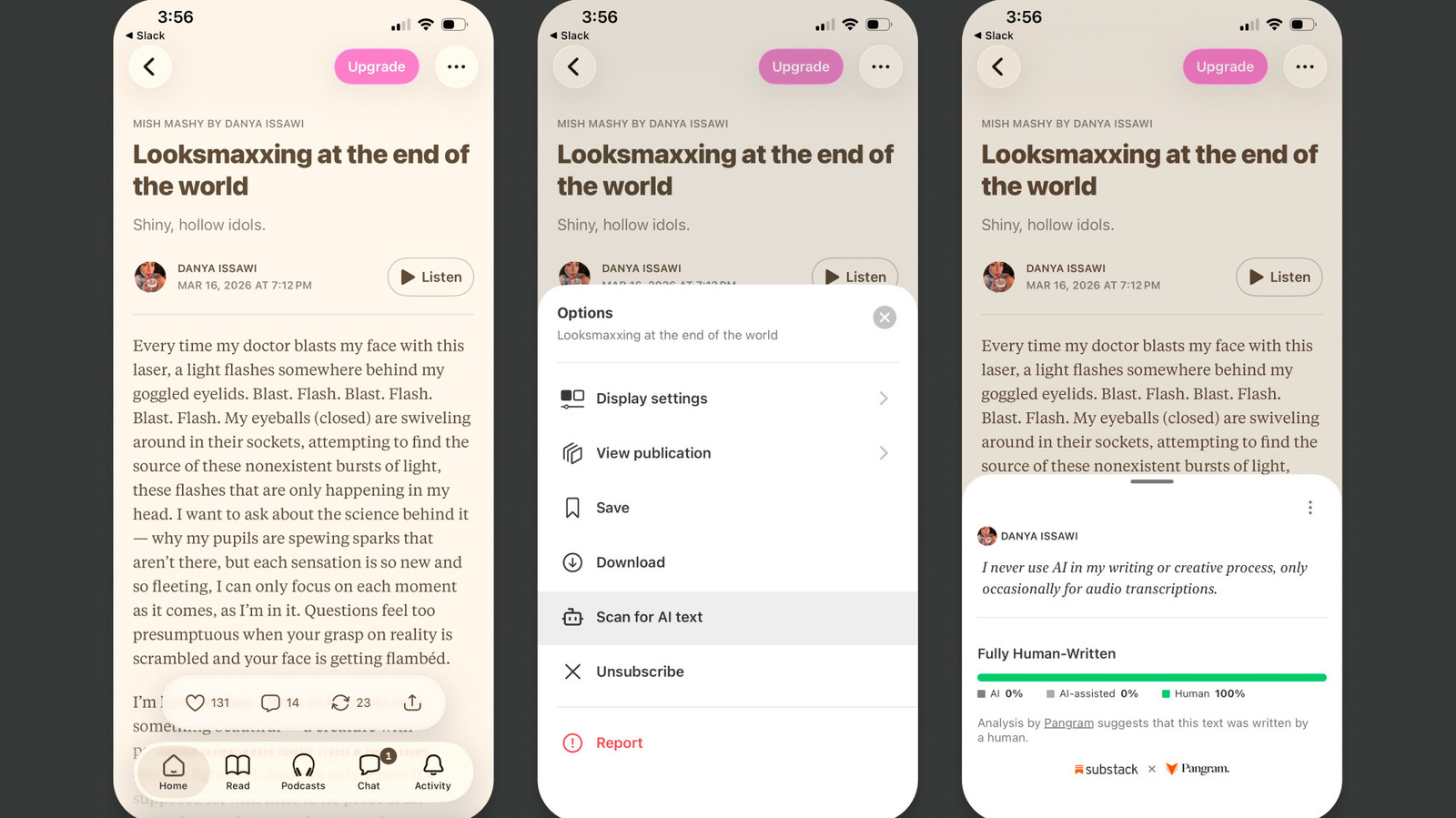
Substack has introduced an AI detection feature, developed in partnership with Pangram, that lets readers assess how much of a piece of content was likely written by artificial intelligence. The move reflects growing pressure on publishing platforms to address concerns about undisclosed AI-generated content, and comes alongside a new feature allowing creators to explicitly disclose their use of AI when producing their work. Substack framed the changes around transparency, arguing that "people should know what they're getting."
The detection tool works on text over 100 words published from the launch date onwards, and is available immediately on web and iOS, with Android support expected later. Substack's announcement took a notably combative tone, criticising LinkedIn for hosting AI-generated content and coining the term "Claudefishing" for using AI to fake human connection. However, the company acknowledged that Pangram's detection has limitations, an admission reinforced by separate reporting from The Atlantic questioning the accuracy of AI-detection tools more broadly.
In short
- Substack launches AI content detection tool with Pangram
- Creators can now disclose AI use in their posts
- Company admits detection tool has accuracy limitations
Steelman: both sides, in good faith
The strongest fair case each way — we don't pick a winner.
The case for
Supporters of Substack's approach argue that transparency and creator autonomy should take precedence. They contend that AI is simply a tool, and provided creators disclose their use clearly, readers can make informed decisions about what they consume. This position values innovation and productivity gains whilst respecting audience intelligence to evaluate disclosed AI use, rather than imposing restrictive bans that may hinder legitimate applications.
The case against
Critics counter that the detection tool's acknowledged limitations undermine the entire transparency scheme, since readers cannot reliably discern AI-generated content. They argue the core issue is platform authenticity and community trust, not merely disclosure—and that imperfect detection creates false security whilst potentially normalising AI-generated content that degrades the value proposition of human-curated platforms. This side prioritises community integrity over technological progress.
Explained simply
Substack is a platform where writers publish newsletters and articles for subscribers. The company has introduced a tool that readers can use to check whether a piece of content was likely written by artificial intelligence rather than by a human. This reflects growing concern across publishing platforms about undisclosed AI-generated content appearing online.
The detection feature was developed with a company called Pangram and works on articles over 100 words. Alongside it, Substack has created a way for writers to voluntarily disclose when they have used AI in producing their work. These changes are framed around the principle that readers should know what they are getting.
However, the tool has important limitations, which Substack itself acknowledged. Broader reporting has suggested that AI-detection tools generally struggle with accuracy. This means readers should view the results as suggestive rather than definitive when trying to work out whether something was written by artificial intelligence.