Culture news and discussion on TalkFuse.
Old Firm disorder report damning – how will authorities respond?
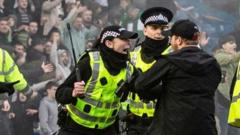
An independent review into crowd disorder at the Old Firm Scottish Cup quarter-final at Ibrox in March has delivered a damning verdict, criticising Rangers, Celtic, the Scottish FA, the SPFL, police and both clubs' ultras groups. Author Mark Blackbourne, a sports event consultant, concluded that violence at the match came within a very small margin of escalating into a "violent mass confrontation", and argues that existing disciplinary sanctions are too weak, delayed and inconsistently applied to change fan behaviour. He is calling for football authorities to move away from fines towards tougher measures such as immediate restrictions on crowd numbers.
The report details how Celtic's penalty shootout win triggered a pitch invasion by hundreds of the more than 8,000 away fans, followed by a hostile counter-invasion from Rangers supporters, some masked and carrying poles and reinforced gloves; it took police four minutes and 28 seconds to regain control. Other findings include a crush risk in the Broomloan Road as ticketless Celtic fans forced their way past security, an absence of policing plans outside the ground, officers describing themselves as "petrified" to work the fixture, a steward arrested after allegedly taking payment to admit fans, and a Celtic employee struck by a masked Rangers fan. Both clubs now face disciplinary charges as authorities consider how to respond.
In short
- Independent review brands Ibrox Old Firm disorder in March a near-riot.
- Report criticises Rangers, Celtic, SFA, SPFL, police and ultras groups.
- Author urges tougher sanctions, including immediate crowd restrictions, over fines.
Steelman: both sides, in good faith
The strongest fair case each way — we don't pick a winner.
The case for
The review's finding that violence came dangerously close to escalating into mass confrontation, combined with evidence that current fines are weak, delayed and inconsistently applied, justifies implementing substantially tougher measures such as immediate crowd restrictions. These would provide genuine deterrence and signal to clubs and fans that disorder carries real consequences beyond financial penalties that larger institutions can readily absorb.
The case against
Restricting crowd numbers would unfairly punish thousands of law-abiding supporters for the violent actions of a small minority, infringing on supporters' legitimate right to attend matches. Rather than restricting attendance, authorities should prioritise the systemic reforms the review itself identifies—improved stewarding, adequate policing resources and better security—combined with proportionate disciplinary measures.
Explained simply
The Old Firm is the fixture between Rangers and Celtic, Scotland's two biggest and fiercest rival football clubs based in Glasgow. These matches have a long history of large crowds and intense rivalry, though disorder at such fixtures remains a persistent concern for authorities.
In March, Rangers and Celtic met in a Scottish Cup quarter-final at Ibrox, with more than 8,000 Celtic supporters attending. After Celtic won the penalty shootout, hundreds of their fans invaded the pitch, and Rangers supporters then invaded the pitch as well; some Rangers fans were masked and carrying poles and reinforced gloves, and it took police over four minutes to restore order.
An independent review of the disorder has concluded that the violence narrowly avoided escalating into a major and serious confrontation. The review criticises football authorities, both clubs and police for their handling, and argues that current disciplinary measures are too weak and slow to effectively deter fan violence.