Business news and discussion on TalkFuse.
Go woke, get rich: why rightwing hate campaigns don’t affect the box office
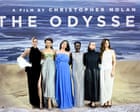
Christopher Nolan's film adaptation of The Odyssey became one of the summer's biggest box office hits despite a sustained online hate campaign led by Elon Musk, who accused the film of "woke" casting choices and claimed it disrespected Homer's original epic poem. Musk's repeated attacks, including false claims that casting decisions were driven by new Oscar diversity requirements, inspired a wave of similar rightwing criticism online, but failed to dent public interest in the film, illustrating a recurring pattern in which such campaigns do not translate into real-world commercial damage.
The controversy centred on the casting of Lupita Nyong'o and Elliot Page, which Musk falsely suggested was required to satisfy flexible new Oscar diversity rules that do not, in fact, mandate specific casting. Despite weeks of criticism, The Odyssey has taken in more than $260m, putting it on course to surpass even the inflation-adjusted earnings of 2004's Troy, a film some critics ironically championed during the backlash. Commentators point to factors such as Nolan's popularity as a director, a starry and diverse cast including Matt Damon, Anne Hathaway and Tom Holland, and strong reviews as reasons the film succeeded regardless of the online outrage.
In short
- Elon Musk led online backlash against Nolan's The Odyssey over "woke" casting.
- Film has grossed over $260m despite the campaign.
- Latest example showing rightwing hate campaigns rarely hurt box office results.
Steelman: both sides, in good faith
The strongest fair case each way — we don't pick a winner.
The case for
The film's commercial success demonstrates that audiences embraced the diverse casting, suggesting it enhanced rather than undermined the story's appeal. The online criticism was often grounded in false claims, like fabricated Oscar rules, indicating resistance to representation itself rather than legitimate artistic concerns. Diverse casting reflects contemporary audiences and brings fresh interpretive perspectives to classics—Nolan's actors delivered acclaimed performances. Attempting to delegitimise casting through coordinated campaigns represents suppressing creative freedom and should be rejected regardless of box office outcomes.
The case against
The film's success is attributable to Christopher Nolan's proven directorial talent, ensemble star power, and strong reviews—not validation of the casting approach itself. Casting should prioritise the best actor for the role and fidelity to source material, not demographic representation. Legitimate artistic concerns about creative choices are being mislabelled as 'hate campaigns,' which discourages honest debate about storytelling priorities. Commercial success doesn't establish whether casting was artistically justified; success can come despite questionable creative decisions if other elements are sufficiently strong.
Explained simply
Homer’s Odyssey is an ancient Greek poem about Odysseus’s long journey home after the Trojan War. It has been retold many times, including in films, and Christopher Nolan is a prominent director whose projects often attract wide attention.
The film’s cast includes Lupita Nyong’o and Elliot Page, alongside stars such as Matt Damon, Anne Hathaway and Tom Holland. Online criticism focused on casting and claims about diversity rules; the Oscar rules discussed do not require films to cast specific actors.
The debate matters because it raises questions about whether online campaigns can change what audiences choose to see. A film’s commercial success can also depend on factors such as its director’s following, its cast and reviews.
Business Culture Elections Entertainment Film Markets Politics Space Technology