World news and discussion on TalkFuse.
Burkina Faso, Mali and Niger launch bid for 2032 Afcon
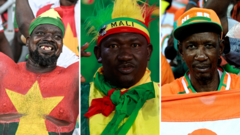
Burkina Faso, Mali and Niger, all currently led by military governments, have submitted a joint bid to host the 2032 Africa Cup of Nations after the Confederation of African Football (Caf) opened applications for the 2028, 2032 and 2036 editions. The move is notable given the security situation across the Sahel states remains volatile due to ongoing jihadist attacks, and the three countries have pivoted away from Western security partners towards Russia since forming their own regional alliance after quitting Ecowas last year.
The Malian Football Federation said the bid would centre on "solidarity, regional integration and sustainable development" for African football. Caf president Patrice Motsepe said the trio would have "as good a chance as everybody else" and would not be penalised for being run by juntas, though he stressed that safety, security and free movement of fans remained non-negotiable requirements he would need to assess, including through planned visits to the countries; he added that democracy and free elections were "non-negotiable" for Caf more broadly, even as it deals with "reality" on the ground. Burkina Faso hosted Afcon in 1998 and Mali in 2002, while a final decision rests with Caf's executive committee.
In short
- Burkina Faso, Mali and Niger jointly bid to host 2032 Afcon
- Bid comes despite ongoing jihadist violence and juntas' Russia ties
- Caf boss says security concerns must be addressed before any decision
Steelman: both sides, in good faith
The strongest fair case each way — we don't pick a winner.
The case for
These nations have legitimate hosting claims and established Caf history—Burkina Faso hosted in 1998, Mali in 2002—and deserve merit-based evaluation rather than automatic exclusion based on governance form alone. The Sahel states argue that disqualifying military governments sets a discriminatory precedent and undermines African sovereignty; they see the tournament as an opportunity for regional integration, development, and positive international engagement. The Caf president's framework of assessing safety, security, and fan movement rather than penalising political systems allows these nations a fair chance whilst maintaining standards, with evaluation focused on demonstrable capacity to meet tournament requirements.
The case against
The documented and ongoing jihadist violence across the Sahel presents genuine security risks that cannot be treated as merely another governance consideration; protecting fans, players, and tournament integrity is a non-negotiable operational requirement. The volatile security environment is measurable and current, not speculative, and Caf has a duty to ensure the tournament is viable and safe. The practical reality is that resources constrained by conflict, ongoing instability, and military governance may limit capacity to guarantee the free movement, protection, and infrastructure that Afcon demands, making the tournament's success genuinely at risk regardless of the host nations' intent or previous history.
Explained simply
The Africa Cup of Nations is the main international football tournament for African national teams. The Confederation of African Football, known as Caf, organises it and chooses which country or countries host each edition.
Burkina Faso and Mali have hosted the tournament before; Niger has not. The three countries have formed a regional alliance after leaving the West African bloc Ecowas, and their military-led governments have shifted security ties towards Russia as attacks by armed groups continue across the Sahel.
Hosting would require Caf to consider whether venues, security and travel between the countries could support teams and fans. Caf also says democracy and free elections matter to the organisation, while the final choice of host rests with its executive committee.
Africa Government Politics Sport World