World news and discussion on TalkFuse.
After its Baldur’s Gate 3-era splurge, Hasbro is scaling back its gaming ambitions following $56m loss, but Warlock and Mass Effect-like Exodus are safe
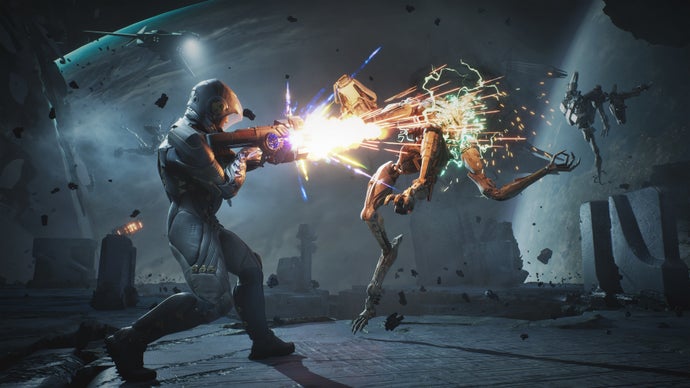
Hasbro is pulling back from its ambitious video game publishing push after recording a $56 million (£41.9 million) write-down across its games portfolio, a plan that had originally been launched in 2022 in the wake of Baldur's Gate 3's success. The toy giant, which owns Dungeons & Dragons publisher Wizards of the Coast, has already cancelled several projects and cut jobs, and CEO Chris Cocks has now signalled a narrower focus on established franchises rather than broad expansion into original gaming ventures. This matters because it marks a clear retreat from Hasbro's earlier ambitions to become a major force in video game publishing, with future investment concentrated on fewer, higher-confidence titles.
The write-down, described as a non-cash impairment charge, covers cancelled games originally slated for 2028 and beyond and was disclosed during Hasbro's second-quarter 2026 earnings call. Despite the cuts, Cocks confirmed that two key projects remain on track for 2027 release and have entered their "finishing phases": the Mass Effect-style sci-fi RPG Exodus and the newly announced Warlock: Dungeons and Dragons. He cited Magic: The Gathering Arena, Monopoly Go and Baldur's Gate 3 as models for future investment, prioritising Magic, D&D, owned platforms and partner-led projects. Other casualties include an unannounced D&D action game from Stig Asmussen's Giant Skull studio, whose team is still seeking a new publisher, while a Baldur's Gate 3 sequel remains unconfirmed despite over two years of talks with potential partners.
In short
- Hasbro takes $56m write-down, scaling back video game publishing ambitions
- Exodus and Warlock: Dungeons and Dragons remain on track for 2027
- Baldur's Gate 3 sequel still not confirmed after two years of talks
Steelman: both sides, in good faith
The strongest fair case each way — we don't pick a winner.
The case for
Hasbro's retrenchment represents prudent financial management after an ambitious strategy failed to deliver adequate returns. A $56 million write-down demonstrates that betting heavily on gaming expansion without proven execution capabilities was unsustainable, and focusing instead on core competencies—Magic: The Gathering, Dungeons & Dragons, and proven partner arrangements—aligns resources with demonstrable market success. Gaming remains an unpredictable, capital-intensive industry requiring sustained expertise, and Hasbro's decision to maintain high-confidence projects whilst cutting speculative ventures reflects appropriate risk management.
The case against
Abandoning broad gaming ambitions squanders Hasbro's strategic opportunity and valuable intellectual property at a critical market moment. Baldur's Gate 3's success validated D&D's gaming potential, yet one difficult investment period has prompted retreat rather than refinement; persisting through initial challenges is standard in gaming's hit-driven economics. With promising titles like Exodus in finishing phases, cutting projects broadly cedes long-term growth to competitors and forfeits the chance to build a sustainable publishing operation that could capitalise on Hasbro's unmatched fantasy franchises.
Explained simply
Hasbro is a toy and entertainment conglomerate best known for franchises such as Dungeons & Dragons and Magic: The Gathering. The company owns Wizards of the Coast, which publishes these world-famous brands.
In 2022, following the critical and commercial success of Baldur's Gate 3 (a video game based on Dungeons & Dragons), Hasbro decided to expand significantly into video game publishing. The company invested heavily in developing and publishing new games across multiple platforms, seeking to capitalise on the potential of interactive entertainment.
Video game development is expensive and requires investment over many years before any financial return materialises. This means the industry carries particular risk for any company, especially those attempting to build a diverse portfolio of multiple gaming projects.
Americas Business Companies Entertainment Gaming Software Technology